Poverty rate to stay near 40pc until 2026: WB



ISLAMABAD: Poverty reduction in the country is expected to gradually resume as the nation makes progress on reforms and macroeconomic stability, according to a new report from the World Bank.
The “Macro Poverty Outlook for Pakistan”, released by the World Bank on Friday, says limited growth in real wages and employment will keep the poverty rate near 40 per cent through fiscal year 2026. At the same time, monetary poverty will remain high, it says.
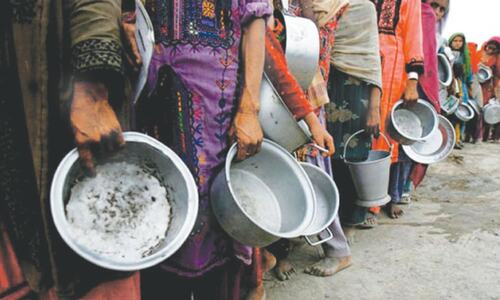
Tepid growth in non-agricultural sectors led to falling real wages for construction, trade and transportation, while employment and labour force participation rates and job quality indicators have not risen. These, together with fiscal consolidation and high inflation, led to a poverty rate of 40.5 per cent in the fiscal year 2024 and an additional 2.6 million Pakistanis falling below the poverty line.
Presenting the outlook, the report says that with high-base effects and lower commodity prices, inflation will slow to 11.1pc in the current fiscal year but remain elevated due to higher domestic energy prices, expansionary open market operations and new taxation measures.
These price conditions are likely to exert more pressure on poor and vulnerable households by limiting real labour income growth to less than one per cent in the fiscal year 2025.
Social protection expenditures increased while development expenditures declined, weakening social service delivery and delaying reductions in alarmingly high stunting and learning poverty rates, the report says.
The fiscal deficit is projected to rise to 7.6pc of GDP in the fiscal year 2025 due to higher interest payments but is expected to decrease gradually as fiscal tightening measures and falling interest payments take effect.
Fiscal consolidation will lead to continued high energy inflation and higher taxes on goods and services, which will worsen monetary poverty, welfare and human development outcomes.
The recovery is expected to continue, with real GDP growth reaching 2.8pc in FY25, as the economy benefits from the availability of imported inputs, easing domestic supply chain disruptions and lower inflation.
Business confidence will also improve with credit rating upgrades, reduced political uncertainty and fiscal tightening measures, such as the devolvement of constitutionally mandated expenditures to the provinces and higher agricultural income taxes. However, output growth will remain below potential as tight macroeconomic policy, elevated inflation and policy uncertainty continue to weigh on activity.
Pakistan faced an economic crisis at the beginning of FY24 with heightened risks of debt default. Political uncertainty, fiscal and external imbalances and global monetary tightening led to pressures on domestic prices and foreign reserves.
The situation has improved significantly since then, even if risks remain high. With the approval of the IMF Stand-By Arrangement in July 2023, exchange rate flexibility was restored, import controls were relaxed and fiscal consolidation measures were introduced.
Coupled with strong agricultural growth, the economy began recovering in fiscal year 2024. However, overall real labour income declined, and with elevated inflation, poverty rose in the fiscal year 2024.
Published in Dawn, October 20th, 2024