THE Middle East is precariously poised on the brink of a full-blown regional war that has been widely feared for months.
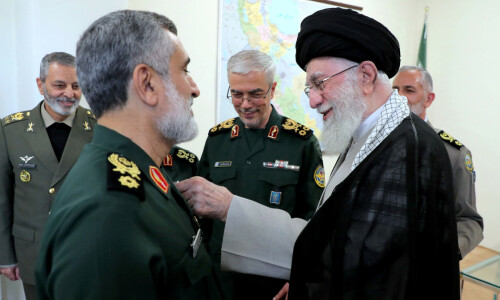
Israel’s assassination of Hamas and Hezbollah leaders and an Iranian Revolutionary Guard commander as well as its invasion of Lebanon put Iran in a bind, leaving it with little choice but to respond. And respond it did by raining a barrage of missiles over Israel.
The aim was to send a clear message that it had the capability and reach to punish Israel for its murderous actions and re-establish a level of deterrence. It was also designed to push the US to rein in Israel.
Tehran’s hand was forced by Israel’s unrelenting aggressive actions even though Iranian leaders repeatedly stated they had no interest in entering a conflict which they saw as a trap by Tel Aviv to widen the war. Iran’s President Masoud Pezeshkian reiterated this after the missile attack. At a press conference in Doha, he declared Iran did not seek a war. It had shown patience but that emboldened Israel to act with greater impunity.
In remarks to a cabinet meeting, he disclosed that Western powers had urged Tehran to exercise restraint after the assassination of Hamas chief Ismail Haniyeh, holding out the promise of a ceasefire in Gaza. The truce didn’t happen while Israel’s continuing military offensive in Gaza was met by silence by those calling for restraint. He warned of a tougher response if Israel attacked Iran but stressed the need to prevent the crisis from escalating.
Israel of course threatened retaliation for Iran’s ballistic missile attack with Prime Minister Benjamin Netanyahu saying Tehran made a big mistake and will “pay for it”. Perhaps Israel chooses Oct 7, the anniversary of the Hamas assault, to launch an attack. While Tel Aviv is reported to be assessing several military options, the region is on a knife-edge. This dangerous situation prompted UN Secretary General António Guterres to call for urgent efforts to prevent an all-out war, which would have “profound and devastating consequences” for the region. He told an emergency UN Security Council meeting that “the raging fires in the Middle East were fast becoming an inferno”.
Can a full-scale conflict be averted in the Middle East? One scenario is that tit-for-tat actions between Iran and Israel take place in a measured way while the international community weighs in decisively to ensure that confrontation between the two foes remains limited and doesn’t escalate out of control. There is indication such efforts are underway. The role of the US is obviously crucial. Although Washington has declared its backing for Israel’s right to militarily respond to Tehran’s action and said it is considering sanctions against Iran, President Joe Biden is urging Tel Aviv to “respond in proportion”.
The fate of the Middle East hangs in the balance with Iran and Israel set on a collision course.
The US and its G7 allies have cautioned Netanyahu against an attack on Iran’s nuclear facilities, which would mark a major escalation leading to a full-fledged Israel-Iran war that would plunge the region into uncharted territory. Biden has made it clear he will not support an Israeli strike on Iran’s nuclear sites. As for Israel targeting Iran’s oil facilities, Biden first said he had discussed that possibility. But later he claimed he had advised Israel to consider ‘other alternatives’ to oilfield strikes.
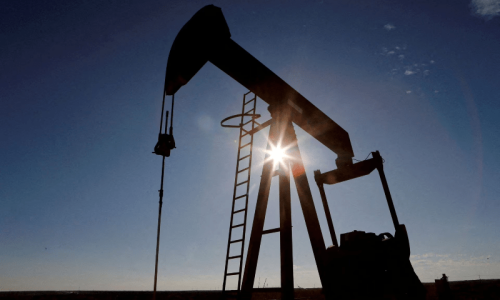
Such an attack would shake the global energy market and trigger an oil price surge. Prices have already started rising especially after Biden’s earlier remarks. Would Washington really want American consumers to face higher oil prices at election time in the US? Disruption in oil supplies would have global repercussions. Half of China’s oil imports, for example, come from the Middle East, including from Iran.
There are fears an Israeli strike on Iranian oil installations could provoke Tehran to disrupt the oil flow from the Strait of Hormuz, which will send the oil price soaring. These considerations are driving appeals to the Israeli leadership from the US and its Western allies to avoid a major step up the escalatory ladder.
The other scenario is of a massive attack by Israel followed by equally strong retaliation by Iran, which descends into a no-holds-barred military confrontation between them with uncertain and devastating repercussions for the region. It is possible that urgings for ‘proportionality’ from its Western benefactors including a lame-duck Biden administration are spurned by the Israeli leadership. Emboldened by assassinations of Hamas and Hezbollah leaders and ‘weakening’ of the axis of resistance, Israel may now want to deliver a ‘decisive blow’ to Iran in order to reshape the region’s strategic landscape.
For its part, Tehran has reportedly conveyed to the US that while it doesn’t seek war, “the phase of unilateral self-restraint” is over, indicating it would respond with full force to an Israeli retaliatory strike. An Israeli strike would be met by an “unconventional response” that could include targeting Israeli infrastructure. Iran’s armed allies in the axis of resistance are already threatening to intensify their operations against Israel. In the worst-case scenario, a full-blown war could erupt with unpredictable consequences for the region and global stability.
While the region and the world wait to see how the Israel-Iran confrontation will play out, Israel has continued its fierce military campaign in Gaza, bombing schools, refugee camps and an orphanage, with the death toll now exceeding 41,000. It has carried out a ground invasion of Lebanon despite US objections, with over 2,000 people killed in Israeli attacks across the country. In intense clashes with Hezbollah fighters several Israeli soldiers have also been killed. Israeli air strikes continue to pound Beirut. No condemnations are heard from Western governments of Israel’s aggressive actions on multiple fronts.
Meanwhile, the Western media still reports these developments from an extremely biased lens. Interviews with freed hostages and killings of Israeli soldiers receive prominent coverage, while the carnage and killings of thousands of innocent people in Gaza are mostly ignored, reinforcing the trend of the past year of dehumanising Palestinians.
The fate of the Middle East hangs in the balance as uncertainty abounds about Israel and Iran’s next moves in a highly fraught environment. The coming weeks will determine if a wider war can be avoided or whether the region will descend into a deadly regional conflagration.
The writer is a former ambassador to the US, UK and UN.
Published in Dawn, October 7th, 2024