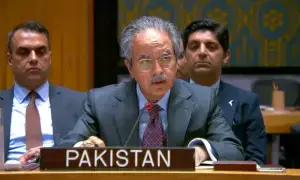
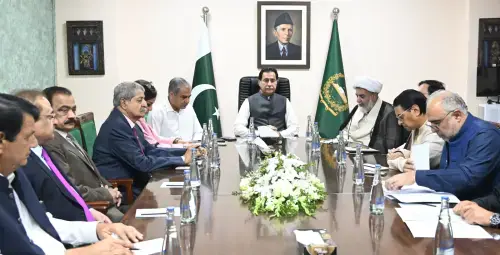
IT is welcome that Afghanistan’s neighbours are speaking with one voice when it comes to the critical issue of terrorism emanating from the Taliban-ruled state’s soil. At the third meeting of the Quadrilateral group on the side lines of the UN General Assembly held recently in New York, the foreign ministers of Pakistan, Iran, China and Russia called upon the Afghan Taliban regime to take verifiable action against a number of terrorist groups based in Afghanistan. This grouping should not be confused with the ‘other’ Quad, which brings together the US, India, Japan and Australia in an anti-China alliance. The list of terrorist entities highlighted at the meeting, included IS, Al Qaeda, Etim, etc, and also mentioned the banned TTP and BLA. Pakistan has for long been expressing its concerns about the use of Afghan soil by malevolent militant actors, particularly the TTP. Now it seems that Afghanistan’s other neighbours are also sensing the urgency of the matter. The statement called on the de facto Afghan authorities “to fight terrorism … and eliminate all terrorist groups” on their soil, while adding that they must prevent the use of Afghan territory “against its neighbours, the region, and beyond”. The statement also condemned TTP attacks in Bannu and Bisham earlier this year.
There are two ways to address the militancy problem in Afghanistan. One way is to unilaterally send in the jets and gunships, as the US and its allies did in 2001. This approach resulted in the return of the Taliban after two decades to Kabul, indicating that even counterterrorism measures cannot be imposed from the outside. The second is what the Quadrilateral group is pursuing: sustained diplomatic pressure on the Afghan Taliban to act against terrorist groups on their soil. The wording of the statement is direct, indicating that Afghanistan’s neighbours have hardened their tone regarding the militancy issue. While the Taliban leadership is indeed made up of hard-core ideologues who will refuse to cut off all links with their militant brethren, more pragmatic members of the group must be engaged and convinced to keep armed groups in check, and not allow them to destabilise the neighbourhood. The Taliban are keen to do business with regional states, particularly China. Therefore, it should be communicated to them that trade and terrorism cannot go together, which is why they must act.
Published in Dawn, October 4th, 2024