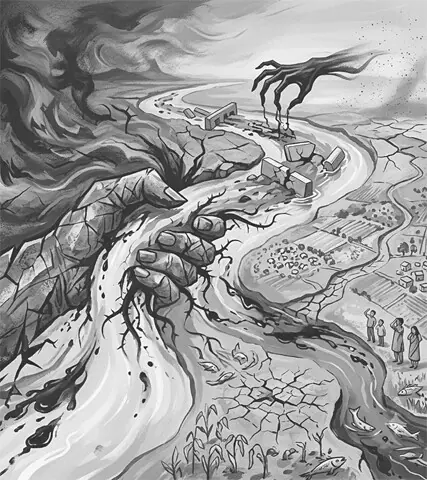
IN September every year, world leaders gather in New York for the United Nations General Assembly (UNGA) session where they deliver finely crafted speeches that are meticulously prepared by their respective bureaucrats. These speeches, shaped by diplomatic obligations and protocols, reflect noble aspirations for a world free from hunger, war, disease, illiteracy, inflation and the phenomenon of climate change.
Almost all the speakers stress the elusive pursuit of peace and prosperity. They do this while they themselves travel in luxury, stay in grand hotels, and are dressed in expensive outfits. They remain far removed from the reality of the suff-ering masses for whom they supposedly speak.
In a world torn apart by deadly conflicts in Gaza, Ukraine and elsewhere, global leaders gather to speak of peace. Yet, the speech delivered by the Israeli prime minister this year was notably aggressive, reflecting military preferences and incu-rsions over diplomacy.
His reluctance towards peace initiatives was visible, and shortly after his speech, the world witnessed Beirut in flames. The aggressive stance underscored the grim reality that peace, while spoken of, remains a rare and distant ideal in many parts of the world.
In a world ravaged by wars, conflicts and disputes, peace is the rarest of commodities. It is much discussed, por-trayed as a priority, but too often it remains a victim of empty rhetoric.
It is assaulted time and again without any meaningful action to be protected, adhered to, or to be achieved. The verbose speeches at the UNGA clearly have no real impact on the aggressors.
The real power at the UN lies not with the General Assembly, but with the Security Council, where five permanent members — the United States, Russia, China, the United Kingdom and France — hold veto power.
This arbitrary, dictatorial as well as authoritarian veto power is the greatest impediment to world peace and devel-opment. It is ironic that the global conscience and collective voice are held hostage by a few wielders of this blind, overriding power. The veto power has to be done away with.
The global sentiment for a peaceful resolution of disputes must be respected. The UN should reflect the collective will of the global populace, not succumbing to the whims of a few powerful states. Failure to implement relevant reforms risks repeating the mistakes of the UN’s predecessor, the League of Nations, and condemning the institution to irrelevance.
Qamer Soomro
Shikarpur
Published in Dawn, October 2nd, 2024