Bangladesh floods leave 71 dead, fears of waterborne disease rise


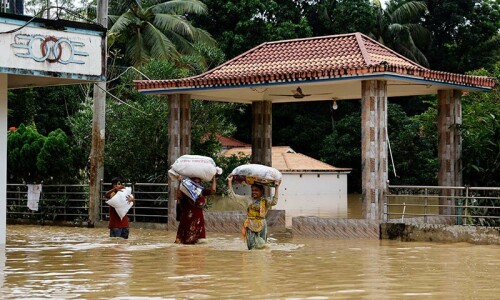
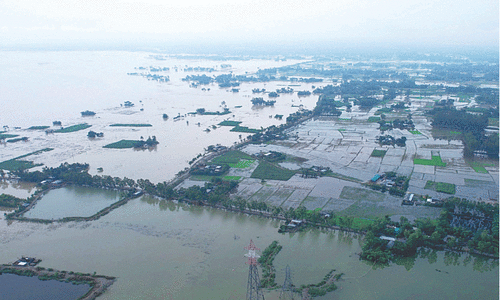
The death toll from floods in Bangladesh rose to 71 on Tuesday with millions of people still stranded in devastated areas and increasing concern about outbreaks of waterborne disease as the inundation recedes.
The floods, triggered by relentless monsoon rains and runoff from upstream waterways, have wreaked havoc over the past two weeks, causing widespread destruction and affecting around five million people.
More than 580,000 families are still marooned in 11 flood-hit districts and in urgent need of food, clean water, medicine, and dry clothing.
Nearly 500 medical teams were helping provide treatment, with the army, air force, navy, and the border guard assisting in relief efforts.
Authorities are now focusing on preventing the spread of waterborne diseases, a common aftermath of such disasters, and ensuring the availability of clean drinking water.
The Directorate General of Health Services said nearly 5,000 people had been hospitalised over the past 24 hours for cases of diarrhoea, skin infections, and snake bites.
Heavy rain in the capital Dhaka on Tuesday swamped many districts, submerging roads in knee-deep to waist-high water, causing massive traffic jams as vehicles struggled through waterlogged streets.
Crops worth 33.5 billion taka ($282 million) have been damaged, affecting more than 1.4 million farmers, according to a preliminary assessment by the agriculture ministry.
A 2015 analysis by the World Bank Institute estimated that 3.5 million people in the South Asian country were at risk of annual river flooding, which has only increased in recent years due to climate change.
The United Nations Children’s Fund (Unicef) has said two million children are at risk from Bangladesh’s most severe flooding in three decades. Unicef has launched an urgent appeal for $35 million to provide essential supplies to those affected.
Year after year, the lives of millions of children in Bangladesh are being devastated by floods, heatwaves, and cyclones.
Climate change is clearly altering children’s lives, said Emma Brigham, Deputy Representative of Unicef Bangladesh.