International pressure mounts for Gaza truce


• Hamas wants Biden plan implemented; US hopes peace talks will continue
• UN chief urges Israel, Hamas to reach ceasefire deal
• UK, France, Germany seek immediate end to conflict, release of prisoners
GAZA STRIP: International pressure mounted on Monday for a ceasefire in Gaza as the United States, Britain, France, Germany and the United Nations pressed for an end to fighting between Israel and Hamas without further delay.
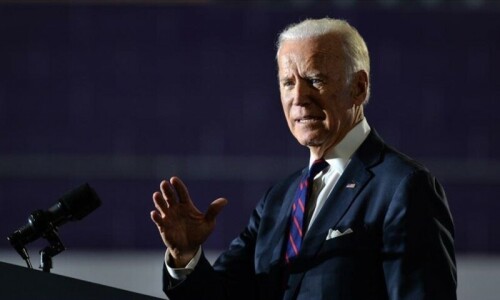
The calls came a day after Hamas urged mediators to implement a truce plan presented by US President Joe Biden instead of holding more talks.
The fighting must end now, and all prisoners must be released, French President Emmanuel Macron, German Chancellor Olaf Scholz and British Prime Minister Keir Starmer said in a joint statement.
“The people of Gaza need urgent and unfettered delivery and distribution of aid,” it said. “There can be no further delay.”
The Biden administration on Monday said it expects Gaza peace talks to move forward as planned, adding that it believes that a ceasefire agreement is still possible.
State Department deputy spokesperson Vedant Patel, speaking to reporters at a briefing, said the department fully expects talks to continue and that it would continue to work with the parties involved, adding that agreement was still possible.
UN Secretary-General Antonio Guterres on Monday condemned the continued loss of life from the war in the Gaza Strip and urged Israel and Hamas to rejoin and conclude a ceasefire and prisoner release deal, deputy UN spokesperson Farhan Haq said. “He also again underscores the need to ensure the protection of civilians and for unimpeded and safe humanitarian access into and across Gaza,” said Haq.
International mediators have invited Israel and Hamas to resume talks towards a long-sought truce and prisoner-release deal, after deadly Gaza strikes and the killings of Hamas and Hezbollah leaders sparked fears of a wider conflict.
Israel has accepted the invitation from the United States, Qatar and Egypt to send negotiators for talks planned for Thursday.
“The reason we’re doing that is to finalise the details of the implementation of the framework agreement,” Israeli government spokesman David Mencer told a news conference.
The government of Prime Minister Benjamin Netanyahu was slow to publicly embrace the proposal after Biden laid it out on May 31, and some far-right Israeli ministers still oppose it.
Hamas said on Sunday it wanted the implementation of the plan, which Biden described as Israeli and was later endorsed by the UN Security Council, “rather than going through more negotiation rounds or new proposals”.
Unveiling the plan, Biden had said the first phase of the proposed roadmap would include a “full and complete ceasefire” lasting six weeks, with Israeli forces withdrawing from “all populated areas of Gaza” and some prisoners freed in exchange for Palestinian prisoners held by Israel.
The second phase would see the remaining living prisoners released as the warring sides negotiate “a permanent end to hostilities”, followed by “a major reconstruction plan for Gaza” and the return of dead prisoners’ remains.
Fears of conflagration
Hamas last week named its Gaza chief Yahya Sinwar to succeed slain political leader and truce negotiator Ismail Haniyeh, killed July 31 in Tehran in an attack blamed on Israel, which has not claimed responsibility.
Haniyeh’s killing, just hours after Israel assassinated the military chief of Lebanese group Hezbollah in a strike on Beirut, spurred intense diplomacy to avert a wider war in the Middle East.
Israeli Defence Minister Yoav Gallant told a parliamentary commission on Monday that the country had strengthened its defences and organised “offensive options” as “threats from Tehran and Beirut may materialise”.
Pressure for a ceasefire in Gaza grew after civil defence rescuers in the territory said an Israeli air strike on Saturday killed 93 people at a school housing displaced Palestinians.
Gaza officials told AFP on Monday that they had identified the bodies of 75 of those killed, while others were charred and torn apart.
Iran, Hamas, Hezbollah and other regional allies have vowed retaliation against Israel for Haniyeh’s killing and that of Hezbollah’s military chief Fuad Shukr. US Defence Secretary Lloyd Austin ordered an aircraft carrier group to hasten its arrival in the Middle East, the Pentagon said on Sunday.
Published in Dawn, August 13th, 2024