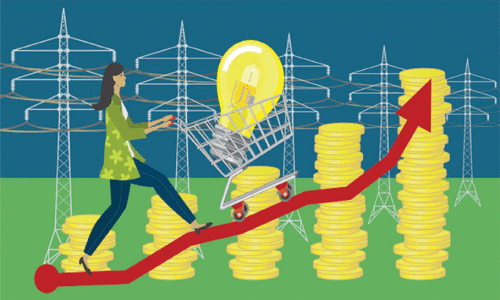
ISLAMABAD: Amid rising electricity bills, the National Electric Power Regulatory Authority (Nepra) has announced an increase in electricity tariffs by Rs2.56 per unit, resulting in an additional collection of over Rs33 billion from consumers in August.
The tariff hike was revealed on Thursday as part of the monthly fuel cost adjustment (FCA) for June. These additional charges will be reflected in the August bills of electricity customers. The hike will not affect lifeline consumers and K-Electric users.
This marks the second consecutive increase, as there was a Rs3.33 per unit rise for fuel adjustment in May, collected from consumers in July. Nepra allowed ex-Wapda distribution companies (Discos) to raise an additional Rs41 billion from consumers in July.
According to a notification, the Central Power Purchasing Agency (CPPA), responsible for procuring electricity from power plants on behalf of distribution companies, requested an increase of Rs2.63 per unit. However, during a hearing on July 31, Nepra approved a slightly lower fee of Rs2.56 per unit, leaving the judgement pending.
A recent Nepra inquiry report revealed that millions of users across the country faced inflated bills during the April-June period after losing their right to reduced rates and slab benefits.
The inflated bills particularly affected lifeline consumers (using 51-100 units per month) and those in the protected category (up to 200 monthly units), as they were pushed out of the monthly ceiling, resulting in higher rates than their actual consumption warranted.
Meanwhile, to address criticism of capacity payments to independent power producers (IPPs), the government established a task force on Aug 5 to investigate financial and operational issues in the power sector.
Prime Minister Shehbaz Sharif also appointed former caretaker energy minister Muhammad Ali as a special assistant on energy and co-chairman of the task force.
Mr Ali has already undertaken a review of the IPPs and recommended that the government conduct a forensic audit of the IPPs.
Former caretaker minister Gohar Ejaz has stated that the nation is closely watching the task force, which is expected to review shortcomings in the electricity sector and IPP capacity payment issues within 30 days.
Exporters have warned the government that rising energy costs will make it difficult to accept export orders from international clients. Domestic industries have already passed the increased electricity costs onto consumers through higher retail prices.
Published in Dawn, August 9th, 2024