ANY hopes of a thaw in Pakistan-India relations should swiftly be put to rest after Indian Prime Minister Narendra Modi’s problematic comments in the disputed Ladakh region.
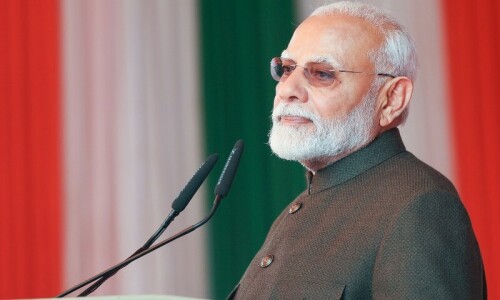
Addressing an event to mark the anniversary of the Kargil war on Friday, Mr Modi used the occasion to lambast Pakistan, trotting out the tired old trope of ‘terrorism’ in an attempt to burnish his nationalistic credentials. If such words had been used on the campaign trail, it would have been unfortunate yet understandable.
But the Indian leader’s eagerness to indulge in Pakistan-bashing so early into his third term can only be construed as the ruling BJP’s aversion to the idea of establishing better ties with this country. The Indian prime minister accused Pakistan of trying to stay relevant through “terrorism” and “proxy war”. He said that Pakistan had “not learnt any lessons” from the past, while adding boasts and threats aimed at this country.
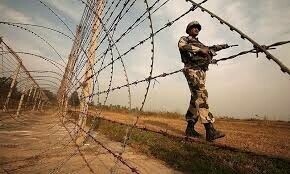
Perhaps the direct trigger for Mr Modi’s undiplomatic and highly inflammatory outburst is the situation in occupied Kashmir, where there have been a number of recent attacks targeting Indian forces. According to one tally, at least 12 Indian soldiers have been killed in the occupied region this year so far.
However, India has no one to blame but itself for unrest in the disputed territory. India has claimed that its controversial step of stripping held Kashmir of its special constitutional status five years ago has brought peace and development to the region. If that is the case, why does India maintain over 100,000 troops in this geographically small region? The fact is that, instead of carrying forward the tripartite dialogue involving Pakistan and the Kashmiris to peacefully resolve the Kashmir question, the Modi dispensation has sought to unilaterally change ‘facts on the ground’, even though the region continues to be seen as a disputed territory as per international consensus.
Responding to India’s tirade, the Foreign Office has said that while Pakistan is ready to defend itself, “it remains committed to promoting peace” in the region. Practically, this means that the deep freeze in relations that took hold in August 2019 will continue until India decides to approach Pakistan with respect and the desire to make peace. Sabre-rattling aside, India should avoid any misadventures, as Pakistan can and will defend itself. When New Delhi feels that it is ready for peace, it is welcome to call Islamabad.
The blueprint for peace already exists, whether in the shape of confidence-building measures, or the Musharraf-era scheme for a resolution to the Kashmir dispute. All these measures can be discussed and fine-tuned, leading to a just resolution. But first, Delhi must stop demonising Pakistan, and show a willingness for peace.
Published in Dawn, July 28th, 2024