THE clarification was much needed and, perhaps, could have come sooner.
The DG ISPR’s Monday press conference was helpful in addressing some key concerns regarding the scope and objectives of Azm-i-Istehkam, even though it remains to be seen whether the briefing will have its intended results. The only complaint was that it should not have been left to the ISPR to set the record straight: it had been the government’s responsibility to manage national political consensus on Azm-i-Istehkam, and it clearly failed in this regard.
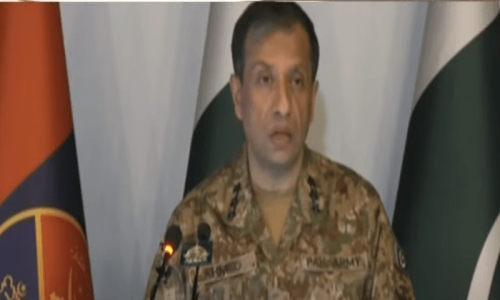
Talking to representatives from local media, DG ISPR Lt-Gen Ahmed Sharif clarified that the initiative was always a broad-based, integrated counterterrorism campaign, “not a military operation as it is being presented”. It will not entail mass displacements or social disruptions à la Operation Zarb-i-Azb, he assured, explaining that it only envisioned the coordinated implementation of updated anti-terrorism policies on which political consensus had already been reached.
A point raised by the DG ISPR seemed particularly pertinent. Lt-Gen Sharif pointed out that any successful CT strategy required equal support from the civilian government. He said that once an area had been cleared of threats by the armed forces, it was the civilian leadership’s responsibility to rebuild and transfer control back to locals. However, ‘build and transfer’ had not kept up, which allowed terrorists to re-emerge, forcing security personnel to stay engaged in a ‘clear and hold’ cycle in problem areas.
This continued engagement of armed forces had given rise to resentment among local populations, he acknowledged. This seems to be a very valid issue that must be addressed by the political leadership of KP and Balochistan and should also be discussed more in the media. It is worth asking why civil administrations have been failing in this regard and what may be done to strengthen their efforts.
However, the press conference seemed to lack an accurate diagnosis of the challenges the armed forces are currently facing. The general’s assertion that criminal elements and terrorists are working together to sabotage Azm-i-Istehkam may not be without merit, but it seemed unfair to paint the political opposition to it as the work of ‘criminal mafias’.
Likewise, while it was positive that the spokesperson largely kept his focus on security-related issues, it was disappointing that politics and politicians did end up featuring in this discussion. A key takeaway from the briefing was that the nation needs to present a united front against forces intent on exploiting its weaknesses. It would seem necessary for this to happen that discussions on national security are separated from the ongoing political turmoil. All stakeholders want what is best for the country and its people. Their differing approaches shouldn’t be viewed with such suspicion all the time.
Published in Dawn, July 23rd, 2024