MUZAFFARABAD: Highlighting the trends of foreign policy in the changing global context, an expert in international relations on Monday said mutual interests formed the actual basis for relationships between countries.
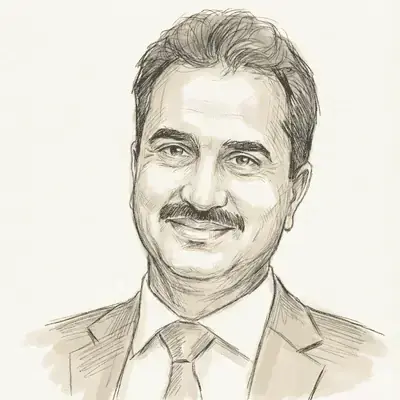
This insight was shared by Chairman of the Department of International Relations at the University of Peshawar Prof Dr Syed Hussain Shaheed Soherwordi at a seminar on ‘Global Scenario and Emerging Trends in Foreign Policy’. The event was organised by the International Relations Department of the University of Poonch, Rawalakot, on Monday.
Using Pakistan’s role in the Afghan war as an example, he said: “If peace is to be established in a society or country, trade must be promoted. Trade guarantees peace in the world because wars have a direct impact on the economy.”
Dr Soherwordi also reviewed the fluctuations in international relations over the past century and urged Pakistani scholars to move beyond western theories. Instead, he advocated for developing ideologies that addressed regional problems and met the country’s specific needs.
“Owing to the rapid evolution of politico-economic and technological dynamics, the global political and economic system is undergoing constant transformations. As there has been a shift in the balance of power, new challenges have emerged, and nations are adjusting their foreign policies to adapt to the evolving international scenario,” he said.
He posed a critical question regarding the priority of Pakistan’s foreign policy in this context and proceeded to address it himself.
“Pakistan’s foreign policy approach towards other countries should be based on neutral grounds. It should not align itself with any power bloc as it did during the Cold War,” he said.
Dr Soherwordi emphasised that Pakistan should realign its relations with the US, resurgent Russia, and rising China without any prejudice for or against any nation. He noted that emerging economies, particularly China and India, were rapidly expanding their influence on the global stage.
“They are posing a threat to the existing liberal value-based world order. The current superpowers feel threatened as these emerging economies have the potential to alter the existing world order with their own, which will pose a significant challenge to the capitalist market economy,” he said,
Dr Soherwordi also discussed the nature of diplomacy and international relations post-Cold War, post-World War II, and in the era of the digital revolution and at the conclusion of his talk answered various questions from students.
Published in Dawn, July 23rd, 2024