ISLAMABAD: Prime Minister Shehbaz Sharif grilled top tax officials on Saturday and declared that he would not be pressured by anyone to reverse tax measures implemented in the budget to broaden the tax base and create conditions for stronger, more inclusive and resilient growth.
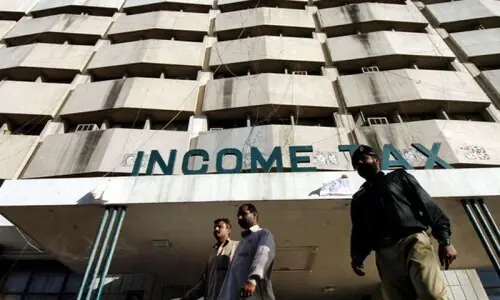
The premier paid a visit to the FBR headquarters in the early hours following the release of an IMF statement from Washington confirming a 37-month Extended Fund Facility of $7 billion for Pakistan as a result of intense negotiations and prior actions held in May, as well as a series of budgetary measures implemented to pave the way for the loan programme.
During the visit, PM Shehbaz did not precisely identify the pressures, although there is strong opposition from a few sectors, including exporters, retailers and flour millers, who are opposing the tax measures implemented in the budget. The flour had been on strike for the past three days against new tax measures, though they have now postponed the strike until July 22 after government’s assurances.
“I will quit if I need to, but I will not come under any pressure,” PM Shehbaz told tax officials and emphasised that he was clear in his position. However, the premier said that he was willing to rectify any honest mistake regarding tax measures. “We need to tighten our belts and serve the public,” he said.
Says he will quit but won’t succumb to pressure from anyone
At the outset of the meeting, the premier expressed deep concern for keeping him in the dark about the tax machinery’s internal digitisation measures and warned top FBR officials to ensure that tax measures are successfully digitalised to avoid returning to the IMF for another bailout.
PM Shehbaz grilled the FBR chairman for failing to brief him on the Customs’ indigenously created Web-Based One Customs (WeBOC) system of goods declaration and clearance.
He asked the FBR chief to brief him on all steps on tax measures within the next two days. “Do not hide anything from me. You need to tell me what you’re doing,” he said.
The division between the Inland Revenue Service (IRS) and Customs within the FBR was highlighted, an issue that was further reinforced during the caretaker government when then-finance minister Shamshad Akhtar proposed an administrative split in the tax administration.
Although the prime minister had planned to review FBR’s performance for two hours, he had to shorten his visit due to other pressing commitments.
He stressed the need for Pakistan to embark on a “long and difficult journey” to avoid future IMF interventions. “If we want to get rid of loans, we need to consider this IMF programme as the final one,” he advised.
The premier congratulated Finance Minister Muhammad Aurangzeb and other cabinet members for securing the loan programme. “This cabinet has done a great deal of work to ensure we achieved this goal,” he said, acknowledging the implementation challenges ahead.
“We must go on a long and difficult journey to improve our macroeconomic numbers. We will need to make sacrifices,” he remarked.
In the current fiscal year, revenue collection will need to be boosted through tax measures totalling 1.5 per cent of GDP and 3pc cent of GDP over the programme. This entails the government implementing substantial revenue measures over the next two fiscal years.
Revenue collections will be supported by simpler and more equitable direct and indirect taxation, including integrating net income from the retail, export, and farm sectors into the tax system. Provinces have already agreed to modify their agriculture income tax regimes to align with federal income tax levels.
“It is our responsibility to act speedily and work tirelessly. Only then will this be the final IMF programme in this country,” the premier said. However, he conceded that increasing taxes on taxpayers was similar to a “premium for those who do not pay taxes and a penalty for honest taxpayers”.
He went on to say that tax authorities needed to adopt new strategies and employ advanced technology to improve tax compliance.
Published in Dawn, July 14th, 2024