ISLAMABAD: The Islamabad police have urged the advocate general to challenge a recent Islamabad High Court (IHC) order that has virtually handicapped intelligence and law enforcement agencies to investigate crimes and monitor terrorist activities.
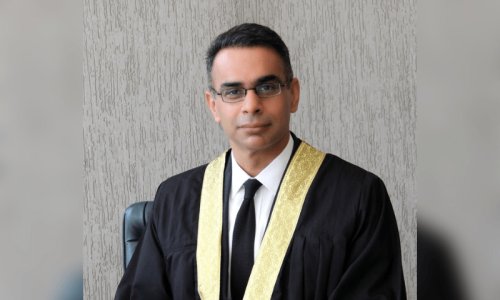
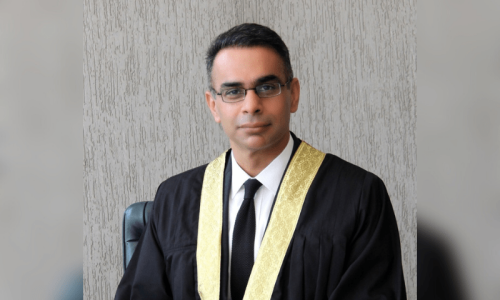
The court’s decision, which prohibits cellular companies from sharing citizens’ data with these agencies, was passed by Justice Babar Sattar. In compliance with the court’s directive, cellular companies have ceased sharing Call Detail Records with law enforcement agencies.
Sources revealed to Dawn that the order, passed in response to petitions from Bushra Bibi, spouse of former prime minister Imran Khan, and Najam Saqib, son of former chief justice of Pakistan Saqib Nisar, has stalled investigations into several cases, including high-profile ones.
Law enforcement agencies rely on CDRs to trace the locations of criminals, terrorists, and abductees, making the court’s order a significant impediment to their work.
The lack of cooperation from cellular companies has rendered geo-fencing impossible. Geo-fencing, a technology that creates virtual boundaries around geographic areas, is crucial in crime prevention, investigation, and the quick dissemination of information in cases of missing persons or child abductions.
In his order, Justice Sattar stated, “It appears from the reports filed by the federal government, PTA and intelligence agencies and arguments of the learned counsel that no authorisation has been granted by the federal government under Section 5 of the Telegraph Act and/or Section 54 of the Telecommunication Act to authorise any individual, entity or agency to intercept calls, messages and to surveil citizens of Pakistan.”
He added: “Doing so without authorisation is an offence punishable with a fine and a jail term under the Telegraph Act, the Telecommunication Act, the Fair Trial Act and Peca. Further, the Fair Trial Act provides a detailed mechanism through which surveillance can be undertaken.
“The provisions of the Fair Trial Act provide for due process and supervision along with checks and balances in the form of intra-executive scrutiny [to be undertaken by the relevant minister, who authorises the surveillance and subsequently by a review committee comprising ministers for law, defence, and interior].”
He noted that “the Fair Trial Act provides for grant of requests for surveillance by a judge of the high court. No phone tapping or other surveillance can be undertaken except pursuant to a warrant issued for such purpose by a judge of the high court.”
Justice Sattar further stated that “it appears prima facie that no official of the executive/federal government, intelligence agency or police is authorised to undertake surveillance of the citizens of Pakistan. To the extent that any employee of the government or investigation or intelligence agency is undertaking surveillance and/or telecom companies and service providers are affording their facilities to facilitate surveillance, all such individuals are liable for offences under provisions of the Telegraph Act, the Telecommunication Act, the Fair Trial Act and PECA.”
He subsequently ruled: “Any such unauthorised surveillance would also be in breach of fundamental rights of citizens guaranteed by Articles 9, 10A, 14 and 19 of the Constitution read with Article 4 and would cause irreparable harm to the liberty, dignity and privacy of the citizens being surveilled.”
“Till the next date of hearing, the intelligence agencies, including, inter alia, the ISI and IB, and police authorities will not surveil any citizens, except in accordance with requirements of the Fair Trial Act and warrants duly issued by a judge of the high court, and neither PTA nor the telecom companies shall authorise the use of their services or equipment for purposes of any surveillance or interception of phone calls or data.”
The next hearing in this case is scheduled for June 25.
When contacted, Islamabad Advocate General stated his intention to file a civil miscellaneous application before the same judge before the next hearing, expressing hope that the court would issue an appropriate order in the matter.
Published in Dawn, June 16th, 2024