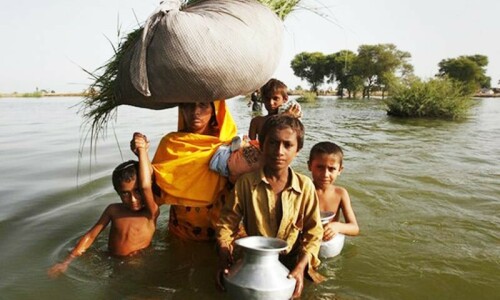
ISLAMABAD: Coordinator to the Prime Minister on Climate Change Romina Khurshid Alam on Friday urged all federal and provincial departments to complete measures to protect the lives and livelihoods of people from ongoing heatwaves and possible monsoon floods.
She also directed all provinces, including Azad Jammu and Kashmir (AJK) and Gilgit-Baltistan (GB), to ensure the maintenance of sufficient stocks of disaster relief items to ensure in-time preparedness against above-normal rainfall.
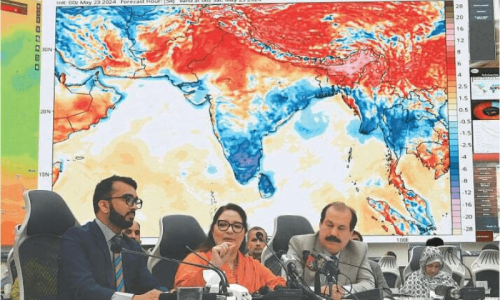
In a statement, the PM’s coordinator was chairing the meeting of the second National Task Force on Global Warming and Heatwaves with representatives of the National Disaster Management Authority (NDMA), Global Change Impact Studies Centre (GCISC), ministries of science and technology, climate change, national health, services and information, Pakistan Meteorological Department and officials from the provincial governments joining through video link.
She urged all relevant federal and provincial departments to enhance their preparedness concerning the threat of flooding during the upcoming monsoon spell, stock maintenance and heatwave effects.
Romina emphasised the timely execution by all stakeholders of the NDMA’s National Action Plan regarding flood threats in southern Punjab, Sindh and Balochistan. She also stressed the inclusion of lady health workers and midwives in the medical relief camps to be established by concerning federating units during emergency situations.
The PM’s aide said the country’s vulnerability to climate change-caused disasters would continue to deepen as the disasters, particularly heatwaves and floods were becoming more intense and frequent as the world continued to heat up because of untamed heat-trapping carbon emissions.
“The adverse socio-economic impacts of the disasters are unlikely to be overcome as long as the well-coordinated disaster risk mitigation or prevention measures are not taken jointly by all federal and provincial departments,” Ms Alam said.
She assured of her ministry’s unwavering support at all levels so that the country’s disaster vulnerability was lessened through effective collaboration among the federal and provincial departments, mainly the national and provincial disaster management authorities, health, education, agriculture, water and energy departments.
The PM’s aide said like many other parts of the world, Pakistan was also experiencing the adverse repercussions of global warming, leading to more frequent and intense heatwaves as witnessed this year in May and in the previous years. Changes in weather patterns contribute to unpredictable and extreme temperature variations.
Highlighting the country’s heatwave vulnerability, Romina Khurshid said Pakistan had become highly vulnerable to heatwaves due to its geographical location, shifting climate patterns, declining or changing rainfall patterns, expanding summer season untamed illegal tree-cutting and urbanisation.
Meanwhile, meeting participants suggested that addressing the country’s vulnerability to heatwaves required a multi-faceted approach, including improved urban planning, better infrastructure, awareness campaigns on heatwave preparedness and measures to mitigate climate change.
Additionally, investing in early warning systems and improving access to healthcare services could help reduce the impacts of heatwaves on vulnerable populations, they added.
During the meeting, the PM’s coordinator took exception to the illegal tree cutting in the country’s various parts, particularly in Khyber Pakhtunkhwa, Azad Jammu and Kashmir and Gilgit-Baltistan.
Romina Khurshid also said recurring fire incidents in the forest areas, particularly in Khyber Pakhtunkhwa, Murree, Nathiagali and Islamabad, had added only salt to injury.
She said untamed deforestation had only aggravated the country’s vulnerability to the impacts of floods.
“Because forests play a crucial role in reducing flood risks by regulating water flow, stabilising soils, and providing natural flood control mechanisms, protecting and restoring forest ecosystems are essential components of comprehensive flood risk management strategies, particularly in areas prone to flooding,” she added.
PM’s Coordinator Romina Khurshid directed the inspector general of Pakistan (Forest), Ministry of Climate Change and Environmental Coordination to coordinate with all provincial stakeholders on the subject and submit the report after the Eid vacations.
She also advised the Ministry of Science and Technology to come up with innovative technology for aerial firefighting.
Published in Dawn, June 15th, 2024