VIENNA: Planned talks between Iran and the UN nuclear watchdog aimed at breaking the impasse over Tehran’s nuclear programme have been put on hold after the death of President Ebrahim Raisi, an agency report said on Monday.
The temporary suspension of talks between Iran and the International Atomic Energy Agency (IAEA) comes as its chief Rafael Grossi reiterated his concern over public statements made in Iran regarding its nuclear weapons capability.
In the report, Grossi said that “further public statements made in Iran…regarding its technical capabilities to produce nuclear weapons and possible changes to Iran’s nuclear doctrine only increase… concerns about the correctness and completeness of Iran’s safeguards declarations.”
Iran has always denied any ambition to develop nuclear weapon capability, insisting its activities are entirely for peaceful purposes. Earlier this month, Grossi visited Iran in a bid to improve cooperation with Tehran, urging leaders to adopt “concrete” measures to address concerns over its nuclear programme.
After returning from his trip, Grossi decried “completely unsatisfactory” cooperation with Tehran, saying he would like to see “results soon”.
Breaching deal limits
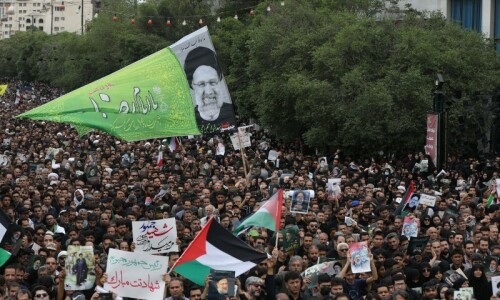
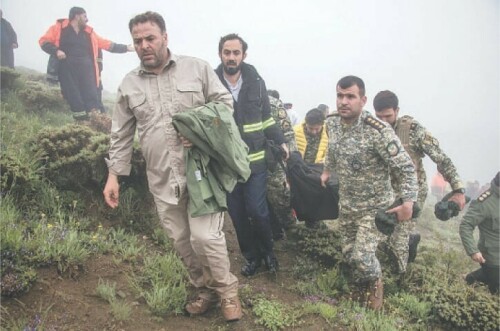
But in the meantime, the deaths of Iran’s president Raisi, his foreign minister Hossein Amir-Abdollahian and six others in a helicopter crash on 19 May have further complicated the situation.
One day after the helicopter crash, “Iran indicated that due to the ‘special circumstances’, it was no longer appropriate to hold substantive discussions” and a new date would be set, a confidential report on Monday said.
With presidential elections scheduled for the end of June, Grossi “reiterated… his call for, and disposition to continue” the negotiations.
At the same time, Iran has significantly ramped up its nuclear programme and now has enough material to build several atomic bombs.
In a separate confidential report ahead of an IAEA board of governors’ meeting next week, the agency said Iran’s estimated stockpile of enriched uranium had reached more than 30 times the limit set out in the 2015 accord.
According to the report, Iran’s total enriched uranium stockpile was estimated at 6,201.3 kilogrammes as of May 11, up by 675.8 kilogrammes from the last quarterly report in February.
Tensions between Iran and the IAEA have repeatedly flared since a 2015 deal curbing Tehran’s nuclear programme in exchange for sanction relief fell apart. EU-mediated efforts to revive the deal — bringing the US back on board — have so far been fruitless.
Published in Dawn, May 28th, 2024