From time to time, the issue of asserting sovereignty to conduct independent trade and economic policies to propel progress has surfaced more in the form of rhetoric than substance as low-commodity productivity fails to deliver export-led growth.
This has created external sector vulnerabilities, leading to lacklustre inflows of foreign direct investment and loans.
Pakistan needs to build “its own credible reform path, making it worth the investment by external finance,” according to Oxford University’s professor of economic policy Stefan Dercon.
He further explains, “It can build a legacy for itself by prioritising development: a legacy that creates a bright economic future for Pakistan.”
Grassroots democracy may be critical in improving current political stagnation that is snowballing into serious economic vulnerabilities
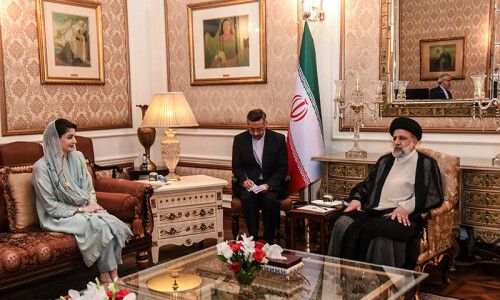
Now, the issue of sovereignty has cropped up because Washington has cautioned Pakistan and Iran to be aware of US sanctions while boosting their bilateral economic and trade ties.
Faraz Rahman, Chairman of the Pakistan Business Group, says Pakistan needs to pursue an independent policy to choose foreign trading partners offering better trade terms and pricing.
With the fast-emerging multipolar world, global geopolitics, and Pakistan’s deep-seated crisis, exercising state sovereignty has become much more essential for tackling pressing problems and moving with the times. Trade and economic diplomacy alone cannot deliver.
To quote a social scientist, a nation’s people should keep their sovereignty in constant use to improve their livelihood and national productivity themselves step by step.
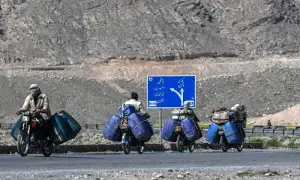
Trade and industry leaders have called for exploring avenues for local currency or barter trade to tap the potential of Pakistan’s bilateral trade with Iran, which is currently targeted at $10 billion by the two neighbours. This would be in keeping with the emerging global trend.
As the US administration intensifies sanctions, risks associated with holding dollar-denominated assets amplify, prompting central banks and policymakers to seek diversification in international financing, says Dr Imran Khalid.
It may be noted that trade sanctions linked to geopolitics, particularly, have stifled free trade to the disadvantage of emerging markets and developing countries.
‘Economic survival, let alone revival, can no longer be divorced from political reforms’
Trade and industry representatives stress the need for completing the long-delayed Iran-Pakistan Gas Pipeline project as, they argue, local industries require cheaper gas to reduce the cost of doing business for producing globally competitive goods and services in order to boost exports.
As a result of US sanctions, the State Bank of Pakistan, data shows official exports to Iran stood at $75,000 in FY23 while official imports were zero.
For policymakers to make independent decisions, it is generally suggested that we need a self-reliant economy and political stability.
But for that to happen in an era of national and individual self-determination, rights and responsibilities have to be widely redistributed.
A United Nations Development Programme (UNDP) official says, “Any country where half of the population does not have the same opportunity cannot be a prosperous country.”
The findings of the UNDP’s 2023 ‘Insights Report for Pakistan’ showed that the country was on track to achieve only 35 per cent of the 169 Sustainable Development Goals targets.
It has long been recognised that Pakistan’s economic progress is not socially sustainable, but corrective actions have been delayed, triggering crisis after crisis in rapid escalation.
“Economic survival, let alone revival, can no longer be divorced from political reforms,” says Sakib Sherani.
Elaborating, he observes, “Pakistan’s only hope is the democratic displacement of the ruling elite, beginning with giving true voice and participatory representation to the citizens of Pakistan, and respecting the people’s mandate delivered in elections.”
The Senate has submitted a report identifying at least 14 opportunities to strengthen parliament to the Inter-Parliamentary Union, a global body representing national parliaments.
Among other things, the upper house of the parliament has underscored its commitment to bolstering the Senate’s role in matters concerning the budget.
“We anticipate that stabilisation policies will continue for the next three to five years, and to be successful, these policies need to be people-centric and address economic justice,’ says UNDP Pakistan’s representative.
Inclusive economic development is not possible without participatory democracy at the grassroots level. The agreement reached between PML-N and MQM-P on empowering the local government does not seem to be a priority of the incumbent government.
In an article for The Express Tribune called ‘Decentralisation and local development’, Dr Fahd Rehman explains that a decentralised local government would be more sensitive to local needs, adding, “Participatory development will increase the ownership of the local people.”
The fiscal space for federal development spending is shrinking. According to the finance ministry’s [Economic Update and Outlook for April][7], the country’s fiscal deficit widened mainly because of the 54pc surge in interest payments to Rs52.5 trillion during the first nine months of FY24 compared to Rs3.6tr in the same period last year.
The cost of living crisis has led to the workers’ call for ‘living wages’ instead of ‘minimum wages’ on Labour Day,
To quote analyst Kashif Mateen Ansari, “A governance model that places public goods and democratic principles at its core is imperative for Pakistan’s progress.”
Published in Dawn, The Business and Finance Weekly, May 6th, 2024