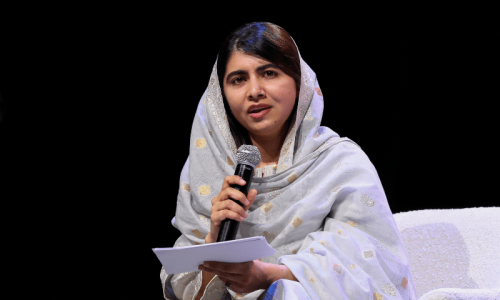
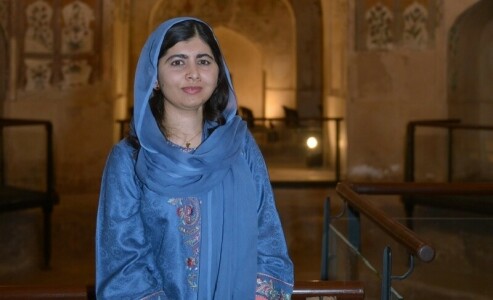
ISLAMABAD: Nobel Peace Prize winner Malala Yousafzai after showing concerns over 26 million out-of-school children and a large number of vacant seats for teachers in Pakistan has offered a helping hand and asked the prime minister to focus on the education sector to promote education.
Malala Yousafzai in a letter to Prime Minister Shehbaz Sharif said: “Currently, 26 million children — predominantly girls in the poorest districts of Pakistan — remain out of school. Furthermore, more than 200,000 teachers’ seats are vacant nationwide.”
“This gap is severely affecting the functioning of schools and negatively impacting student retention and quality of schooling. Our collective aim should be to design a measurable, realistic plan to bring these numbers down significantly over the course of your term,” she added.
Malala further said that her organisation supported civil society and education experts in their efforts to improve teaching practices, digital education, and girls’ leadership development, but still, critical work remained.
Nobel Laureate concerned over 26m out-of-school kids, shortage of teachers
In her letter to the PM, she said: “Congratulations on your appointment as the Prime Minister of Pakistan. I wish you all the best as you begin your term in the office. In the busy months ahead, you will undoubtedly have many critical issues to contend with and agendas to advance. I would humbly ask that you see the education of girls in Pakistan as one of your most urgent and meaningful priorities.”
She said that Pakistan has made significant progress in girls’ education in the last decade, “and I am proud that Malala Fund has continued to play its part. As you may know, Malala Fund has invested more than $15 million in Pakistan. Our work with the Ministry of Federal Education and Professional Training has allowed us to reach more than 4,500 high schools, engaging directly with nearly 500,000 girls through our STEAM partnership.”
She said: “I know that ensuring more girls are able to access and complete school in Pakistan will not come without cost, and budgetary constraints facing the state are understandable. At Malala Fund, we are beginning advocacy work this year to promote the reform of the international financing architecture.”
“This would include efforts that focus on relieving the increasing debt burden faced by many countries. My hope is that these global efforts — including work with stakeholders such as the UN, the World Bank, the IMF, and their donors — can complement and support important work happening within Pakistan to increase the domestic budget for education,” she said and added that right now, Pakistan spends less than 2 per cent of its GDP on education. In the years ahead, “I hope to see this figure reach and surpass 4%, aligned with the targets outlined in your party manifesto for the 2024 general election,” she told PM through letter.
“As you [PM] develop your first 100-day plan, I look forward to working with your government to elevate girls’ education as a priority. I assure you that my team in Pakistan and our grantees are working diligently with your federal and provincial governments, as well as other development partners, to advance our shared goals as rapidly and effectively as possible.”
“I thank you for your attention and look forward to staying in touch, whether on the margins of the UN General Assembly week meetings in September or later this year when I hope to travel to Pakistan again,” she said.
Published in Dawn, April 10th, 2024