0
0

WASHINGTON: The White House converted an Iftar-dinner into a meeting on Tuesday night to appease American Muslim leaders frustrated with the administration’s Gaza policy.
Originally slated as a dinner, the event was reshaped into a meeting format after a number of Muslim leaders declined the invitation, while others raised concerns over the situation in Gaza.
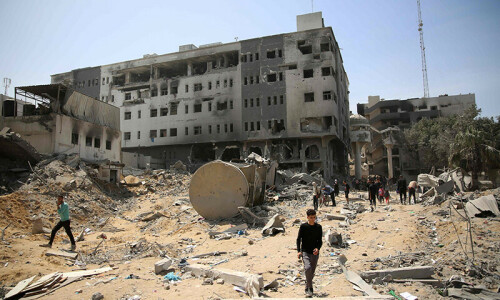
CNN reported that the Iftar-dinner was changed to a meeting because “participants didn’t feel comfortable having a celebratory meal while hundreds of thousands in Gaza are on the brink of famine”.
The meeting was attended by Vice President Kamala Harris, National Security Adviser Jake Sullivan, administration officials, and a small group of Muslim community leaders.
Later, Thaer Ahmad, a Palestinian American physician, told CNN he went to the meeting but left abruptly, as did some other guests. Explaining his decision, Dr Ahmad said he told President Joe Biden, “It’s disappointing that I’m the only Palestinian here, and out of respect for my community, I’m going to leave.”
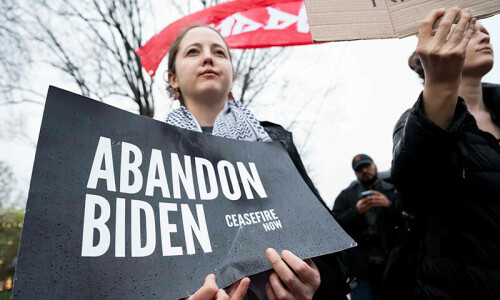
The development underscores the strained relationship between the Biden administration and the Muslim American community over the war in Gaza.
Rejected invitations and growing dissatisfaction over US support for Israel amidst the Gaza crisis have exacerbated tensions.
Emgage Action, a Muslim American advocacy group, said it declined the invitation because of concerns over US military aid to Israel and its implications for the humanitarian situation in Gaza.
Reports in the US media suggested participants used the meeting to discuss pressing matters such as aid distribution, increased medical facilities, and violations of international humanitarian law in Gaza.
Dr Nahreen Ahmed, an ICU physician, stressed the importance of humanising the plight in Gaza and urged for stronger US intervention to safeguard civilians and aid workers.
The US media also reported that some attendees expressed disappointment over what they perceived as a lack of tangible outcomes from the meeting.
Political implications
The event’s downscaled nature reflects the political hurdles confronting the Biden administration amid the Israel-Gaza conflict. Growing public dissatisfaction and activism within key communities, including Arab, Palestinian, and Muslim Americans, pose political challenges for Biden, particularly in battleground states like Michigan where Muslim American populations wield influence.
Acknowledging the sensitivity of the moment, a White House official said in a statement that “President Biden and Vice President Harris know this is a deeply painful moment for many in the Muslim and Arab communities”.
The official said President Biden “made clear that he mourns the loss of every innocent life in this conflict” and expressed commitment “to continue working to secure an immediate ceasefire as part of a deal to free the hostages and significantly increase humanitarian aid into Gaza”.
Published in Dawn, April 4th, 2024