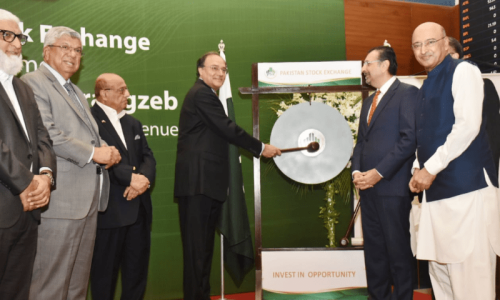
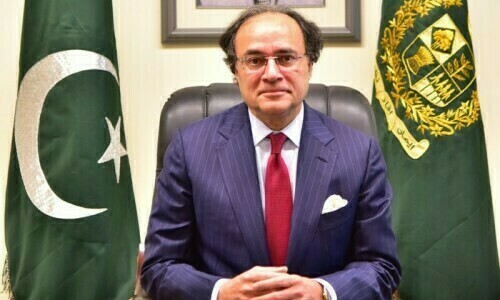
FINANCE MINISTER Muhammad Aurangzeb wants to conclude a larger, medium-term deal with the IMF before the current fiscal year is out. He is also hopeful of getting to the finish line in time. Speaking to reporters at the PSX on Friday, he expressed hopes of reaching a staff-level agreement for the new programme with the Fund by end FY24.
According to him, the lender has been “very receptive” to Pakistan’s request for a larger programme in recent communications. While there was no final decision yet, he said, “it is our desire that by the time we wrap up this fiscal year an [agreement] is reached”. He has repeatedly argued that Pakistan requires IMF discipline for at least the next three years to “execute” the long-delayed structural changes in the economy.
Apparently, the finance minister has also earned the goodwill of the lender, and the upcoming talks on the new programme on the margins of the spring meetings of the Bretton Woods institutions will, hopefully, pave the way for early finalisation of the new loan programme.
At a time when the minister needs the government’s full backing to pull off the crucial deal and implement tough economic reforms over the next several years, it seems that some circles are trying to undermine his role in the cabinet. Prime Minister Shehbaz Sharif’s decision to name Foreign Minister Ishaq Dar to the all-important Council of Common Interests and keep Mr Aurangzeb out of it looks like an attempt to contain his role in decision-making.
Sadly, this was not the only occasion, since the formation of the new government a month ago, that he has been sidelined. Some days ago, Mr Sharif, in a break from tradition, decided to chair the ECC, the top policymaking forum. It was only after widespread criticism that he yielded the position to the finance minister. Likewise, the latter’s role in the privatisation process was also diminished when Mr Dar was appointed head of the Cabinet Committee on Privatisation.
In the CCI’s case, what exactly is the foreign minister expected to contribute to the council’s deliberations? On the other hand, the presence of the finance minister in the CCI — the top constitutional forum mandated to discuss and decide on matters and disputes related to the federation and the provinces — is of utmost importance at this moment because the implementation of several IMF programme goals and policy reforms hinge on the active involvement of the federating units.
There is no better forum than the CCI to enlist the buy-in of the provinces on the IMF programme and reforms. It can only be hoped that sense will prevail and the prime minister will replace Mr Dar with his finance minister in the CCI in the larger interest of the country.
Published in Dawn, April 1st, 2024