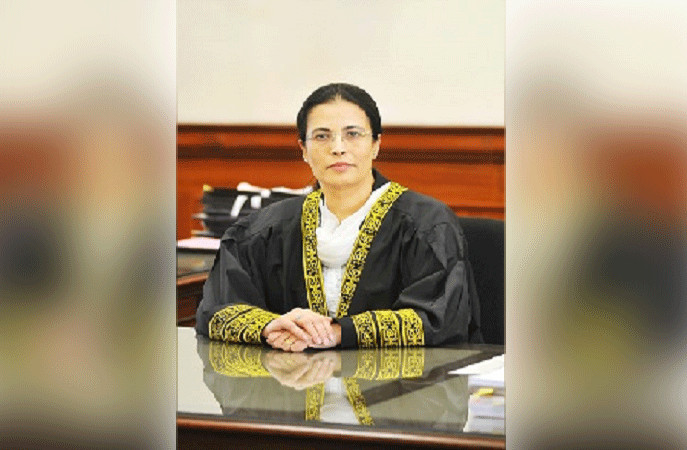
A recent report compiled by the Law and Justice Commission of Pakistan (LJCP) has revealed that of the 126 judges in Pakistan’s superior judiciary, only seven are female.
The upper tier of judiciary includes the Supreme Court of Pakistan, the Federal Shariat Court, and the five high courts.
The report, titled Women in the Justice Sector, aims to report the statistics of women working in Pakistan’s judicial sector, highlighting judges, lawyers, prosecutors and other personnel, read an LJCP press release on Friday.
As per the report, currently there are 3,142 judges and judicial officers working across of the country. Out of these, 2,570 are male and 572 are female, 18 per cent of the total working judges.
The report further reveals that there are currently 126 judges working at the upper tier of the judiciary, which includes the Supreme Court of Pakistan, the Federal Shariat Court, and the five high courts. Out of these 126 judges, 119 are male judges, while only seven are female judges. Therefore, female judges make up only 5.5pc of the total working strength of judges at the upper tier.
Panellists at a session of the Asma Jahangir Conference, entitled ‘Mainstreaming Gender Equality in the Judiciary,’ expressed their opinions on the status of women in Pakistan’s judiciary at a local hotel in Lahore in 2021.
Women’s poor representation in Pakistan’s judiciary, especially in the higher tiers, is a reflection of their overall treatment in society and the issue could be addressed through an assertive action that requires a strong will to address it at all levels, the panellists concluded.
International Commission of Jurists’ legal adviser for South Asia Reema Omer said women’s near absence in the judiciary was a crisis for the country’s democracy as well. She said it was an issue of a particular mindset that there were no women judges in the higher judiciary.
According to the report, the Supreme Court boasts only two female judges compared to the other 12 male judges.
The most female judges — three — are active in the Sindh High Court. Meanwhile, there are no female judges in the Federal Shariat Court, Peshawar High Court or the High Court of Balochistan.
At the district judiciary level, a similar trend is observed in the report, with only 565 female lawyers out of a total 3,016 active staff — less than a fifth of the total figure.
Furthermore, the report highlighted a total of 230,879 lawyers enrolled with different provincial bar associations across the country. Of this number, 198,100 lawyers are men, while 40,000 are female.
“The report highlights the significant contributions of women in the justice sector of the country but also points out that their representation is not proportional to their share of the overall population,” the report stated.
“It is recommended that the government and other relevant stakeholders take steps to encourage the inclusion of more females in the justice sector.”