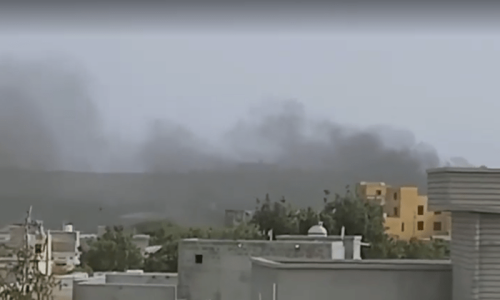
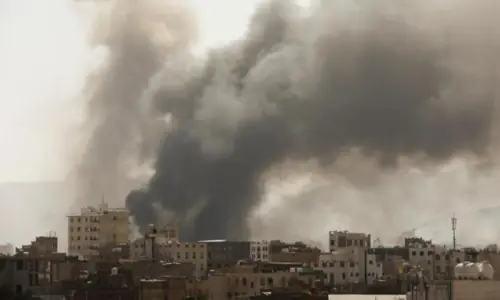
YESTERDAY’S audacious attack on Gwadar’s Port Authority Complex is yet another reminder of the grim trajectory of militancy in the country. Within days of a major terrorist attack in North Waziristan, militants targeted a facility which houses government offices, including those of the security agencies.
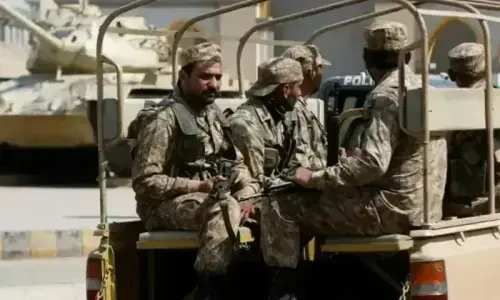
The Majeed Brigade, affiliated with the banned Balochistan Liberation Army, claimed responsibility. At least eight terrorists were killed by security forces, while two soldiers were martyred. The ambush shows that far from being neutralised, separatist militants in Balochistan very much remain a threat to the province’s security.
This is not the first time Gwadar and its environs have been targeted by insurgents. Here, separatism and geopolitics combine in a lethal cocktail, as militants believed to have the support of hostile agencies target Chinese interests in what is supposed to be the jewel in the CPEC crown.
The luxury PC hotel witnessed a similar attack in 2019, also carried out by the BLA, with the terrorist group saying it had targeted the facility as it was hosting “Chinese and other foreign investors”. Even a Chinese-language institute inside Karachi University was hit in a deadly attack in 2022. Striking Gwadar has immense geopolitical significance, as such attacks are designed to scare away whatever investment and economic activities are being carried out in the coastal city.
A proper investigation must uncover how the attackers were able to strike such an official facility housing LEAs. Even otherwise, Gwadar is said to be under a security blanket, mainly to protect Chinese nationals and others associated with CPEC projects in Balochistan. In fact, several observers have pointed to the ‘working relationship’ between religiously inspired militant groups such as the TTP, and Baloch separatist outfits, including the BLA.
This nexus needs to be broken immediately, or else it will compromise the security situation to a dangerous extent in KP and Balochistan, especially if both sets of militants are getting help from beyond our borders. After the Gwadar attack the Balochistan chief minister said that whoever uses violence “will see no mercy from the state”.
While that may be so, along with the security dimension, the sociopolitical and economic aspects of the insurgency must also be examined. This paper has long argued that poverty and deprivation in Balochistan need to be addressed if the issue of separatism is to be tackled successfully.
Foreign investment is direly required but the fruits of these projects — whether CPEC-related, mining schemes, or others — must reach the people of Balochistan. Furthermore, issues such as enforced disappearances, and miserable health and education indicators cannot be ignored and must be given priority.
Unless these contributory factors are addressed in earnest, eradicating separatism will be very difficult, and hostile foreign actors will continue to exploit our internal weaknesses.
Published in Dawn, March 21st, 2024