0
0

ISLAMABAD: The Pakistan Peoples Party (PPP) has said there is no indication of the global money lender seeking to interfere in Pakistan’s constitutionally agreed frame of resource allocation and expressed concerns over the reports about the alleged role of International Monetary Fund (IMF) in Pakistan’s resource allocation.
“There is no indication that the IMF is proactively seeking to meddle in Pakistan’s constitutionally agreed resource allocation frame. Why would the IMF want to put itself in the middle of changing the NFC formula of Pakistan?
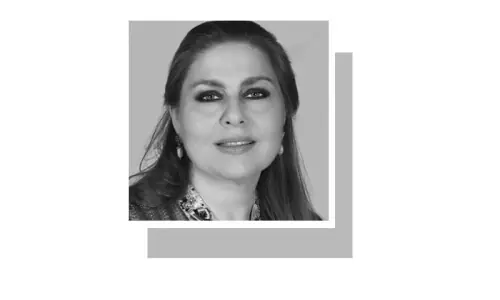
“It seems that it is the federal structure that cannot collect taxes, which incidentally the provinces are doing far better than the Centre,” said PPP Vice President Senator Sherry Rehman in a statement issued on Friday.
She said that rather than further encroaching on provincial shares, the federal government should worry about improving tax collection through the Federal Board of Revenue (FBR). “Since the 7th NFC Award, FBR taxes have remained stagnant in the range of 9pc of the GDP, whereas provincial taxes have increased from 0.3pc to over 1pc of the GDP,” she said.
Senator Rehman said that aside from increasing the tax net, the provinces had also been surrendering a large surplus to the federal government over the last two years.
“In the larger national interest, so far the provinces have also not raised an issue on the federal government appropriating all taxes on petroleum through the petroleum levy rather than sharing these revenues if they were collected through the GST mechanism,” she said.
The remarks came amidst reports of IMF asking Pakistan to reopen discussions on the National Finance Commission (NFC) award, seeking to address the ongoing imbalance in the distribution of fiscal resources between federal and provincial governments.
The IMF reportedly emphasised the need to reassess the NFC award, citing disparities in resource allocation between federal and provincial authorities.
Under the 7th NFC Award the share of Provinces in vertical distribution had been increased from 49pc to 56pc during 2010-11 and 57.5pc during the remaining years of the Award.
The traditional population-based criteria for horizontal distribution of resources amongst the provinces had been changed to multiple-criteria formula.
According to this criteria, 82pc distribution was made on population, 10.3pc on poverty and backwardness, 5pc revenue collection/generation, and 2.7pc on inverse population density.
Published in Dawn, March 16th, 2024