AS the new political set-up prepares its agenda, the recently elected Balochistan chief minister has spoken about the central issue affecting peace in Pakistan’s biggest province: the Baloch insurgency. In an interview aired on a local channel on Sunday, Sarfraz Bugti said that a “general amnesty” was on the cards in order to convince insurgents to lay down their weapons and join the mainstream political process. While holding out the olive branch, he also observed that in case the separatists spurned the offer and refused to abandon the gun, “the writ of the state” would be enforced. When questioned, Mr Bugti did not clearly address the issue of enforced disappearances, saying that while there is no justification for this blatantly illegal practice, the number of missing persons cited is “dicey”.
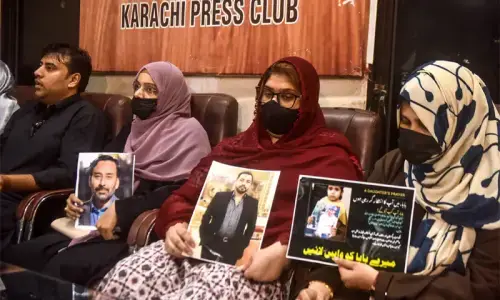
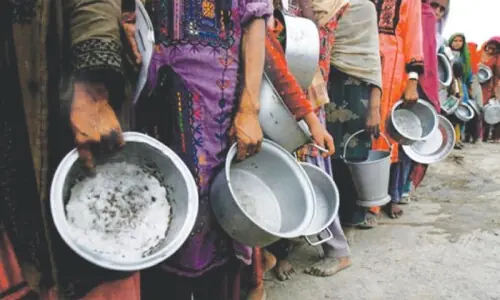
While the offer to end the insurgency through dialogue is welcome, Mr Bugti must realise that such proposals are not made in a vacuum, and that unless the root causes of the violence in Balochistan are addressed, such plans will have little meaning. Moreover, several such attempts to engage the ‘angry’ Baloch have been made by past administrations, backed by the security establishment. Development packages have been announced, while press conferences have been held where Baloch insurgents have bid farewell to arms, announcing that henceforth they would work for the supreme national interest. Yet all these efforts have failed to pacify Balochistan, as violent separatist campaigns as well as the counter-measures of the security forces continue. Perhaps the reason for this is that the state has preferred cosmetic efforts over substantive steps to address the poverty and deprivation that afflict Balochistan. While separatism cannot be defended, and security men as well as innocent civilians have been targeted by the insurgents, the state has, over the decades, done little to uplift the lives of Balochistan’s people. Health and education figures are abysmal, while the considerable mineral wealth the province possesses does not trickle down to the masses. Moreover, the practice of enforced disappearances — picking up people while dispensing with due process — has further fuelled alienation in Balochistan, as its people feel they are not entitled to the fundamental rights guaranteed by the Constitution. If there is to be sincere reconciliation in Balochistan, the state must accept the mistakes it has made, and create an atmosphere of goodwill.
Published in Dawn, March 12th, 2024