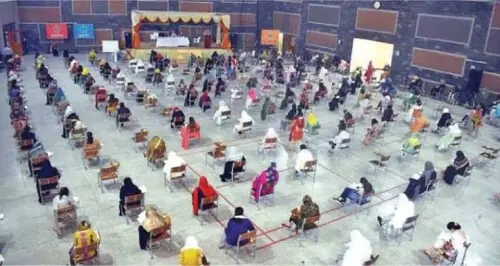
KARACHI: Highlighting the benefits of fasting, a heart specialist at a lecture has said that the holy month of Ramazan can help reduce depression, anxiety, stress and bring an overall improvement in memory and mental well-being.
Prof Rehan Umer, the head of the department of cardiology at Patel Hospital, was speaking on Ramazan and health at a session organised by Karachi University’s Dr Panjwani Center for Molecular Medicine and Drug Research (PCMD) in collaboration with Sindh Innovation Research, and Education Network (SIREN) on Friday.
Citing a study, Prof Umer said that fasting improved self-acceptance, self-sufficiency, social relations, and personal growth. “Fasting has also been found beneficial for people with Type 2 diabetes. However, diabetics must consult their doctors prior to opting for the fast,” he emphasised.
Replying to a question, he said that a patient (managing his or her blood sugar levels well) could take two or three dates in Iftar as this fruit had low Glycaemic Index and didn’t cause dramatic spike in the level of blood sugar when it’s eaten in moderation. Glycaemic Index shows how quickly each food item affects a person’s blood-sugar (glucose) level.
Talking about the effects of cardiovascular diseases (CVD) in Ramazan, he said that fasting in Ramazan did not worsen CVD, adding that patients with stable hypertension and stable angina could fast in the month.
“People with a history of recent heart attack, unstable angina, decompensated heart failure or uncontrolled severe hypertension are advised not to fast,” he said.
Fasting, Prof Umer pointed out, also helped people to develop social and moral values such as feelings of true compassion and empathy for less fortunate people.
Talking about the diet during the holy days, he said that the diet should not significantly be different from the daily routine diet, adding that excessive use of foods rich in carbohydrates and fat especially at Seher and Iftar, should be avoided.
“It is recommended that fluid intake be increased during non-fasting hours and that the predawn meal should be taken late as much possible before the start of the daily fast,” he said, adding that pre-Ramazan education was essential for those suffering from severe diseases.
Published in Dawn, March 10th, 2024