Pakistan urges UNSC to ask Afghan Taliban to cut ties with TTP, eliminate terrorism


Pakistan’s Ambassador to the UN, Munir Akram, has asked the United Nations Security Council (UNSC) to urge the Taliban rulers in Afghanistan to terminate their relationship with the Tehreek-i-Taliban Pakistan (TTP).
The TTP could “soon pose a global terrorist threat” if left unchecked, Ambassador Akram warned the UNSC on Wednesday while addressing a special Security Council session on Afghanistan.
A total of 306 terrorist attacks took place in Pakistan in the year 2023 — including 23 suicide bombings — which killed 693 people (330 security personnel, 260 civilians, and 103 militants) and injured 1,124 others.
In February alone, the country experienced 97 militant attacks, resulting in 87 fatalities and 118 injuries, the Pakistan Institute for Conflict and Security Studies (PICSS) said.
Furthermore, a report by the Pak Institute for Peace Studies’ Pakistan (PIPS) Security found that banned organisations such as the TTP accounted for over 82pc of terrorism-related deaths and conducted 78pc of terrorist attacks recorded in the country.
The report said that the militants’ intensifying attacks indicate that the TTP and its affiliates will continue to resort to an intensified terrorism onslaught with a view to ‘force’ Pakistan to reinstate the process of dialogue.
“The Afghan interim government’s failure to control the TTP and other terrorist groups erodes its claim of full control of its territory that it asserts in order to secure international recognition,” he said.
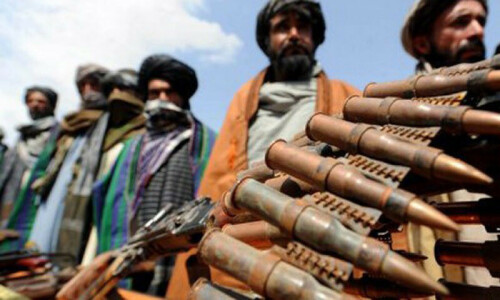
He also urged the UN to investigate how the TTP acquired advanced military equipment and weaponry and identify the source of its finances, which has helped sustain its estimated 50,000 fighters and terrorist operations.
Regarding the reported border incidents, he said that the armed forces respond to “cross-border attacks by the TTP and its affiliates against the country’s border posts and installations”.
“We would expect the UN to call on the Afghan interim government to prevent such cross-border attacks and infiltration by the TTP and other terrorists into Pakistani territory,” he said.
Highlighting that terrorist organisations in Afghanistan pose a security threat to the country’s immediate neighbours, the ambassador said: “Counter-terrorism must be the highest priority in any future roadmap for engagement with the Afghan interim government.”
At the same time, ambassador Akram said that the international community must help millions of destitute Afghans “through the provision of unconditional humanitarian assistance”.
He urged for the “support Afghanistan’s economy and, to this end, the international community should help revive the banking system and facilitate the release of frozen assets to the country’s central bank”.
For its part, the envoy said, the Taliban “must fulfill its international obligations especially regarding the fundamental rights of women and girls promote inclusivity and, above all, eliminate terrorism within and from Afghanistan”.
He called for a realistic road map, with reciprocal steps by the Afghan interim government and the international community, leading to the country’s integration into the international community.
The envoy also detailed some objections to the secretary-general’s report on the situation in Afghanistan, including its claim of an “unfavourable protection environment in Pakistan”.
He underscored that Pakistan had sheltered almost five million Afghan refugees for “over 40 years at great economic, social and security cost with little help from the international community”.
Earlier, Roza Otunbayeva, special representative of the Secretary-General (SRSG) for Afghanistan, in her briefing, stated that “Afghanistan remains a persistent challenge for the international community”.
“With a history of instability, terrorism and contributing to 85 per cent of global opium production, the nation also witnessed millions of refugees seeking refuge in neighbouring countries and beyond,” she added.