Protesting Indian farmers burn effigies of Modi and other ministers


 0
0


Indian farmers demanding higher prices for their crops burned effigies of Prime Minister Narendra Modi and other ministers on Friday as they sought to expand their protest against his government months before elections.
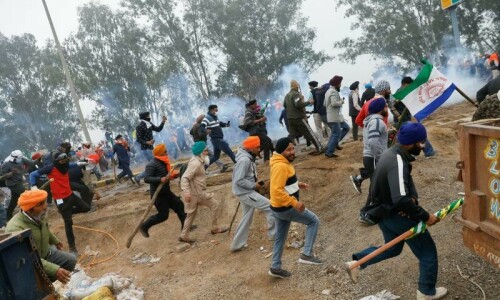
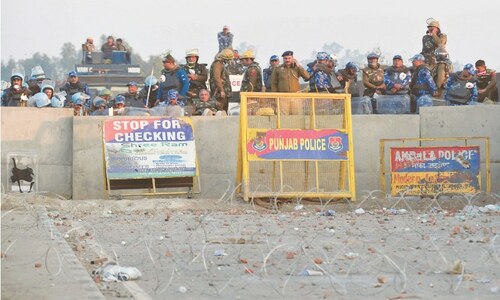
Thousands of farmers began a ‘Delhi Chalo’ (Let’s go to Delhi) march last week but were stopped by security forces about 200km (125 miles) north of the capital, with water cannons and teargas being used to push them back.
Farmer leaders on Thursday announced a series of “mega programmes” across India to press their demands. The “Black Day” today will be followed by a tractor rally on highways on Feb 26, and a farm workers’ public meeting in Delhi on March 14.
Black flags were hoisted on tractors and trolleys lined up at the protest site on Friday. Several protesters, most of whom are Sikhs from the northern state of Punjab, also tied black cloth over their turbans in solidarity.
Farmers also burnt effigies also of Home (interior) Minister Amit Shah and the chief minister of Haryana state, whose police force they accuse of using force against them, and chanted slogans demanding minimum prices for their crops.
A general election is due by May.
Protester’s death
The farmers paused their march for two days on Wednesday after the death of a protester, which they blamed on police aggression.
Sartaj Singh, a senior police officer in Punjab’s Sangrur district, where the incident took place, said the man died at a protest site but that the cause of his death would be known only after the autopsy.
Punjab Chief Minister Bhagwant Mann on Friday announced compensation of 10 million rupees ($120,000) for the dead man’s family.
Farmer leaders rejected the compensation and said they would not allow the autopsy to be conducted until a murder case is registered.
“We will have a meeting in the evening to decide next steps (regarding the march),” farmer leader Sarwan Singh Pandher told reporters.
Amnesty International condemned the protester’s death and urged the government to “respect, protect and facilitate the right to freedom of peaceful assembly”.
“The price of protest must not be death,” said Aakar Patel, chair of board at Amnesty International India.