0
0

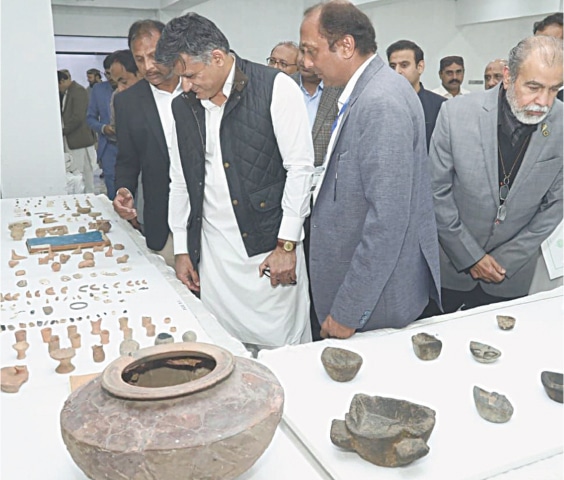
KARACHI: Aimed at preserving archives and artefacts, a state-of-the-art scientific laboratory was inaugurated in the city on Tuesday by caretaker Culture Minister Dr Syed Junaid Ali Shah.
The laboratory — Exploration & Excavation Branch Scientific Laboratory and Data Center — is established to facilitate research on archives and artefacts and ensure their preservation in modern ways.
Situated near the historic site of Romi graveyard, the laboratory is poised to become a hub for preserving cultural heritage.
Speaking on the occasion, Dr Shah said that the preservation of archives and artefacts was a national responsibility. “The first lab of its kind at the national level in Sindh is aimed at ensuring the preservation of treasures beyond those displayed in museums, like those found after the excavation of Mohenjo Daro, now housed in the Treasure House Museum,” he said.
He also stated that technical constraints had hindered the display of many artefacts for over 60 years. The treatment like desalination processes of artefacts precedes their display, and artefacts were previously sent abroad for that purpose. With the establishment of facilities for artefact treatment in Sindh, local preservation became feasible, making articles of historical nature more accessible to the public and researchers.
Dr Shah highlighted plans to increase the number of museums in Sindh, making it mandatory to have one at every heritage site, facilitating researchers.
He mentioned that carbon dating was utilised to accurately estimate the age of artefacts. “It is hoped that we can also avail this facility in Sindh,” he said.
Sindh culture and antiquities department Secretary Khalid Chachar stated that serious measures were being taken to preserve Sindh’s artefacts and archaeology.
Antiquities Director General Mansoor Ahmed Kanasro said that the laboratory offered extensive facilities for artefact treatment, ensuring preservation not only for Sindh, but also for artefacts from across the country. New discoveries would undergo treatment before being displayed, preventing damage to artefacts, he added.
The laboratory is equipped with facilities for acid-free treatment, filming, and long-term preservation of documents for up to 200 years, reflecting a 50-year technological outlook. Additionally, the laboratory also houses a data centre and provides residential facilities for researchers.
Moreover, in conjunction with archaeological records, a web portal was launched, adding another dimension to the preservation and dissemination of historical knowledge.
Published in Dawn, January 31st, 2024