MODERN India’s founding father M.K. Gandhi was shot on Jan 30, 1948, by Nathuram Godse, a member of the Rashtriya Swayamsevak Sangh (RSS). Pandit Jawaharlal Nehru’s secular India died on Jan 22, 2024, in Ayodhya, the janambhumi or birthplace of Lord Rama.
No one knows for sure where or when Rama was born. A site has been contested for at least 500 years, since the first Mughal emperor Babar’s order for a mosque to be built there. The date of Rama’s rebirth on Jan 22, 2024 — not as his legendary successor Lord Krishna but as a modern political avatar — will never be forgotten. Indian Prime Minister Narendra Modi has ensured that.
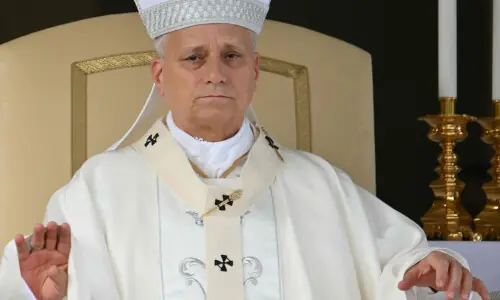
Accompanied by Shri Mohan Bhagwat, head of the RSS, Modi attended the pran prathistha or consecration of the lavish temple dedicated to Rama at Ayodhya, built at a cost of Indian rupees 1,800 crore ($217 million).
The media made much of the event, as PM Modi and his alter ego Amit Shah had planned it should. A select group of invitees included business tycoons who fund the BJP, stars from Bollywood to whom the over-decorated temple must have seemed as familiar as a film set, and once ambitious BJP politicians Modi cut to size.
The Ayodhya mandir project has cemented Modi’s re-election.
Hidden amongst them was L.K. Advani, ever proud of his RSS affiliation and a founder member of the BJP, who organised the first Ram Rath Yatra that began from Somnath (Gujarat) on Sept 25, 1990. It aimed at concluding in Ayodhya a month later. Advani used this yatra to sensitise his fellow Hindus to the Ram janambhumi issue, raising it from the mundane level of a local property dispute to the pious height of an emotive national crusade. Once deputy prime minister, he lost his claim to the top job after he made a complimentary but ill-timed reference to the Quaid-i-Azam in Karachi — their shared birthplace.
Prominent absentees from the Ayodhya festivities were Congress leaders still attached to the umbilical cord of Nehru’s secularism, affronted non-invitees lurking beyond the pale of Modi’s hospitality, and most noticeably the four shankaracharyas representing the cardinal points of Puri (east), Karnataka (south), Gujarat (west), and Uttarakhand (north).
The presence of any of the four shankaracharyas (although not mandatory) would have lent an aura of religious sanctity to the solemn pran prathistha. India’s teenmurti would have shown a singular Hindutva face. The absence of all four, though, attracted the wrong sort of attention. It was as if (the analogy is not an exact fit) Charles III’s recent coronation ceremony had been held in the absence of the bishops of Bath & Wells, of Durham, Hereford and of Norwich.
Some say the schism was doctrinal. The temple is dedicated to a Vaishnavite deity whereas the shankaracharyas veer towards Shaivism. Others felt that as the temple is still incomplete, its consecration is premature. For Prime Minister Modi, the inauguration of the Rama temple now was crucial. It was the fulfilment of BJP’s campaign promises made over numerous elections. A few suspect that one of the shankaracharyas was peeved that promises of custodianship of the Rama mandir made to him by the Congress party when in power had not been honoured by the present BJP government.
All or none may be true. The management of shrines in every faith has always been a lucrative business. The Roman Catholic Church became rich on individual contributions — Peter’s pence — collected in churches across the world. Muslim shrines are often prone to disputes among stick-fingered trustees.
Although the Rama temple at Ayodhya is the most expensive religious project built to date in India (funded by private donations), it will take decades if not centuries for it to catch up with the accumulated wealth of India’s richest temple — the Padmanabhaswamy Temple in Thiruvananthapuram. Said to have assets worth Indian rupees 120,000 crore, managed by a trust headed by the Travancore royal family, it has in its eight underground vaults a treasure trove of “gold idols, gold, emeralds, antique silver, and diamonds”. The inventory ordered in 2011 by India’s supreme court has yet to be completed.
The Ayodhya mandir project has cemented Modi’s re-election this summer. What will he do for an encore? Conceivably, he will order the construction of a fresh temple to mark the birthplace of Rama’s avatar Lord Krishna at Mathura. Ayodhya has cleared the way for him. All Modi needs is evidence of a previous shrine, endorsement by the supreme court, and an avalanche of donations. His re-election as prime minister in 2029 seems assured.
Modi believes that Lord Rama has answered his prayers. To a billion Indians, Modi’s success in propelling their country into economic superpower status is an answer to theirs.
The writer is an author.
Published in Dawn, January 25th, 2024