A lab at the Aga Khan University Hospital (AKUH) on Wednesday said that it had detected the JN.1 Covid-19 variant, currently a cause of concern in several countries, in six out of a total of 15 samples from Karachi.
Classified as a variant of interest by the World Health Organisation (WHO), JN.1 is a sub-lineage of the Omicron variant and has been identified as the most prevalent strain in the United States.
Experts warn that while the JN.1 variant is highly transmissible, it primarily causes mild symptoms similar to a common cold, affecting the upper respiratory tract.
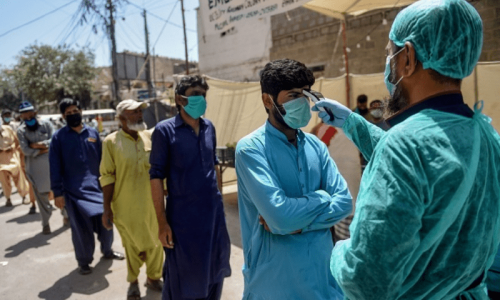
On Monday, two passengers tested positive for Covid-19 at the Jinnah International Airport, raising the total number of travellers detected with the infection within five days to six. On Wednesday, two of the six passengers tested positive for the new variant.
Speaking to Dawn.com, Dr Imran Nisar, the lead investigator at AKUH’s Infectious Disease Research Laboratory, said that people coming back to the country were “randomly” tested at airports and some of them had tested positive for Covid-19.
He said the samples were sent to the National Institute of Health (NIH), the Dow University’s laboratories, and AKUH’s clinical labs.
Nisar said that the infectious diseases lab at AKUH sequenced the positive cases to isolate the variant of the disease. “We processed about 15 samples, out of which six tested positive the new variant,” Dr Nisar said.
“The earliest sample in which JN.1 was discovered was from December 31,” he said, adding that all the samples were from Karachi.
He said that the new variant was “not any more severe” than previous ones but there were concerns about “immune evasion” — which would mean that the vaccines previously administered would not be as effective against the new variant.
The new variant is also “a little bit more transmissible” compared to others, he said.
He said that Covid-19 has been “mutating constantly” since it emerged. “This is the natural evolutionary characteristic of a virus that it mutates every time it multiplies or reproduces,” the doctor said.
“Most of these mutations are not important. They don’t carry any significance but some mutations matter. For example, they can either weaken the virus or strengthen it or bring about minor changes in its characteristics,” he said.
When a variant sufficiently mutates, a person who is immune against the previous variant will not be as immune against the newer one.
“For example, in case of influenza or common cold, a person gets it again and again. Other diseases, such as polio and chicken pox, can be prevented with only a single time vaccination,” he said.
He further said that viruses such as Covid-19 were “highly unstable” and kept mutating “to escape the immune system”.
At the same time, he said that those who were vaccinated against such a virus experienced infections that were less severe. “The last vaccines that people got provide some degree of immunity against this new variant but not 100 per cent,” he stated.
Measures against new variant
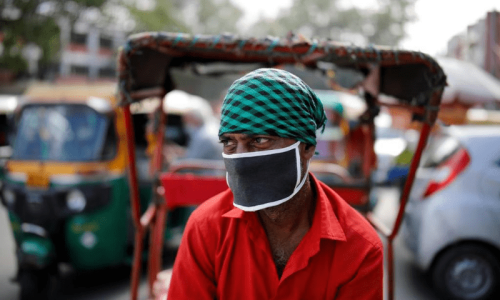
To prevent the the spread of JN.1, the same strategies are advised such as social distancing, wearing masks, proper sanitation and hygiene.
The NIH has also issued an advisory to provinces about the mutating strain of the virus. As per the advisory, the new variant has been classified by the World Health Organisation (WHO) as a Variant of Interest (VOI) with genetic changes predicted or known to affect virus characteristics such as transmissibility, disease severity, immune escape, and diagnostic or therapeutic escape.
As per the NIH officials, the advisory has been issued to alert and facilitate the health authorities and other stakeholders for timely preventive and control measures and ensure preparedness to deal with increased patient influx during the next few weeks.
Last week, Caretaker Health Minister Dr Nadeem Jan said that the country had not yet recorded any cases of the new Covid-19 variant but emphasised “we are on red alert”.
The federal government has also decided to procure 500,000 doses of Covid-19 vaccine. Around 200,000 doses of vaccine will likely reach the country in the coming week, while the remaining will be available in the next phase.