Lander problem threatens US moon mission

WASHINGTON: A robotic lander built by a private company suffered a propulsion system issue on its way to the moon on Monday, upending the first US soft lunar landing attempt in over 50 years as mission managers scrambled to fix its position in space.
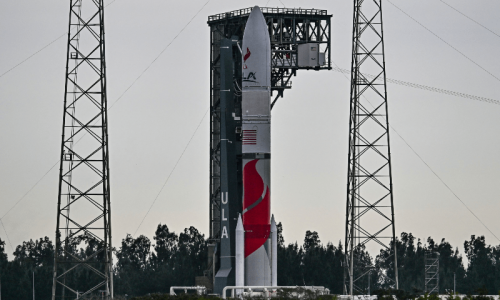
Space robotics firm Astrobotic Technology’s Peregrine lunar lander had launched successfully to space at 0718 GMT from Cape Canaveral, Florida, aboard the first flight of Vulcan, a rocket that had been under development for a decade by the Boeing and Lockheed Martin joint venture, United Launch Alliance (ULA).
But hours after separating from Vulcan, Astrobotic said, issues with Peregrine’s propulsion system briefly prevented the spacecraft from angling itself toward the sun for power.
While mission engineers regained control, the faulty propulsion system is losing valuable propellant, forcing Astrobotic to consider “alternative mission profiles”, suggesting a moon landing is no longer achievable.
The launch of Vulcan, a 200-foot-tall rocket with engines made by Jeff Bezos’s Blue Origin, was a crucial first for ULA, which developed Vulcan to replace its workhorse Atlas V rocket and rival the reusable Falcon 9 from Elon Musk’s SpaceX in the satellite launch market.
The stakes of the mission were high for Vulcan. Boeing and Lockheed, which own ULA in a 50-50 split, have been seeking a sale of the business for roughly a year. The launch was the first of two certification flights required by the US Space Force before Vulcan can fly lucrative missions for the Pentagon, a key customer.
A successful launch of the moon lander, which ULA agreed to fly at a roughly 50 per cent discount given the risks of flying on a new rocket, allows the company to start fulfilling a multibillion-dollar backlog of some 70 missions booked already. Vulcan sells for at least $110 million per launch.
Vulcan’s placement of the Peregrine lander into orbit was “dead on bullseye”, ULA chief CEO Tory Bruno said. “This has been years of hard work,” he added from the company’s launch control room after launch.
But the lander itself failed to enter its correct sun-facing orientation in space and saw its battery levels plummet, hours after it made successful contact with ground teams and activated its propulsion system.
It said in a later update that engineers had regained control of the spacecraft to allow it to charge its batteries. While Peregrine remains in Earth’s orbit, “we have prioritised maximizing the science and data we can capture,” Astrobotic said.
Elusive feat
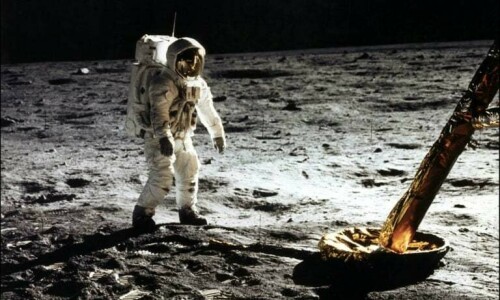
Setting off for a 46-day trek on Monday, Peregrine was poised to mark the first US soft landing on the moon since the final Apollo mission in 1972, and the first-ever lunar landing by a private company _ a feat that has proved elusive in recent years.
“This is the moment we’ve been waiting for 16 years,” Astrobotic CEO John Thornton said after the Lander’s launch.
The mission is the latest in recent years among countries and private companies sprinting to the moon, a renewed stage of international competition in which scientists hope the moon’s water-bearing minerals can be exploited to sustain long-term astronaut missions.
Published in Dawn, January 9th, 2024