The US religious freedom watchdog on Friday again called on the Biden administration to designate India as a “country of particular concern” under the US Religious Freedom Act, citing its alleged targeting of religious minorities overseas.
The US Commission on International Religious Freedom (USCIRF), an independent federal government commission, said “recent efforts by the Indian government to silence activists, journalists, and lawyers abroad pose a serious threat to religious freedom.”
“USCIRF implores the US Department of State to designate India a Country of Particular Concern due to India’s systematic, ongoing, and egregious violations of freedom of religion or belief,” it said in a statement.
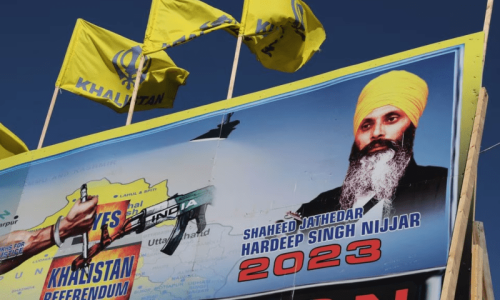
USCIRF Commissioner Stephen Schneck called the Indian government’s alleged involvement in the killing of Sikh activist Hardeep Singh Nijjar in Canada and a plot to kill another Sikh activist, Gurpatwant Singh Pannun, in the United States “deeply troubling.”
The Indian embassy in Washington did not immediately respond to a request for comment. The Indian government routinely denies any discrimination in the Hindu-majority country.
Federal prosecutors in Manhattan said this month that an Indian national had worked with an unnamed Indian government employee on the plot to assassinate a New York City resident who advocated for a sovereign Sikh state in northern India. India’s government has denied involvement in the plot.
The issue is highly delicate for both India and the Biden administration as they try to build closer ties in the face of an ascendant China perceived as a threat for both democracies.
USCIRF said it had recommended each year since 2020 that the State Department label India a country of particular concern, a designation under the 1998 US Religious Freedom Act. The act allows a range of policy responses, including sanctions or waivers, but they are not automatic.
USCIRF Commissioner David Curry said India’s extension of domestic repression to target religious minorities from India living abroad “is especially dangerous and cannot be ignored.” India’s foreign ministry dismissed the recommendation when it was first issued in 2020, criticizing “biased and tendentious comments.”