Taliban rule ‘made girlhood illegal’: Malala


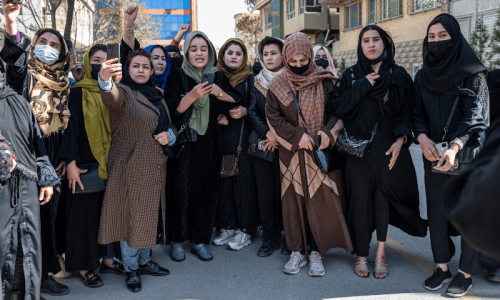
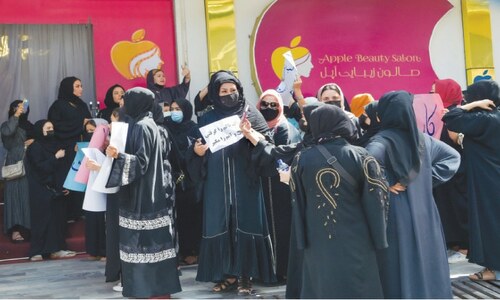
Nobel Peace Prize laureate Malala Yousafzai said on Tuesday that Taliban rule in Afghanistan had made “girlhood illegal”, calling for “gender apartheid” to be made a crime against humanity.
Malala was the keynote speaker at an annual event held by the Mandela Foundation in Johannesburg, South Africa, to commemorate the anti-apartheid icon’s 10th death anniversary.
She narrated how Afghan girls barred from school were “turning to narcotics”, “experiencing depression” and “attempting suicide”.
After condemning the Israeli bombardment of Gaza, she said the crises in Middle East, Ukraine and Sudan had deflected the international community’s attention from the plight of women and girls in Afghanistan.
“Our first imperative is to call the regime in Afghanistan what it really is. It is a gender apartheid,” said Malala Yousafzai. “If you are a girl in Afghanistan, the Taliban have decided your future for you. You cannot attend a secondary school or university. You cannot find an open library where you can read.
“You see your mothers and your older sisters confined and constrained,” the Nobel laureate said.
She said governments should not normalise relations with the Taliban. Malala drew a parallel between restrictions the Taliban had placed on women in Afghanistan and the treatment of black people under apartheid in South Africa.
“South Africans fought for racial apartheid to be recognised and criminalised at the international level. In the process, they drew more of the world’s attention to the horrors of apartheid,” Malala said.
“But gender apartheid has not been explicitly codified yet,” she said. “We have an opportunity to do that right now,” she added, calling for the definition to be inserted in a new UN treaty that is currently being debated.
In an interview after her lecture, Malala Yousafzai said she was concerned the Taliban would take away sciences and critical thinking even from boys.
“It’s so important for the international community to not only step up to protect access to education for girls but also ensure that it is quality education, it is not indoctrination,” she said.
Published in Dawn, December 6th, 2023