ISLAMABAD: The Central Development Working Party (CDWP) on Friday cleared nine development projects worth about Rs224 billion in various sectors, mainly aimed at bringing in much-needed international financial assistance from multilateral and bilateral lenders that had been delayed inordinately because of slow progress on project preparation despite pledges made at the Geneva conference more than a year ago.
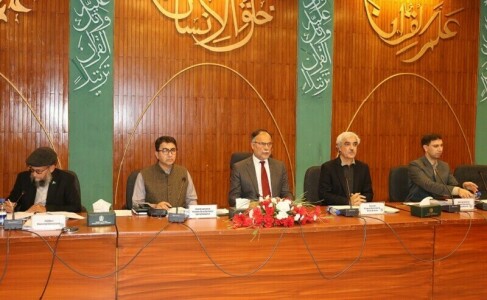
Chaired by Planning Commission’s Deputy Chairman Dr Jehanzeb Khan, the CDWP meeting approved five small projects valued at Rs10.02bn and recommended four larger projects worth Rs213.86bn to the Executive Committee of the National Economic Council (Ecnec) for approval.
Under the current financial rules, the CDWP can directly sanction projects up to Rs10bn, while Ecnec is responsible for green-lighting more costly initiatives based on CDWP’s technical assessments.
The projects taken up for consideration by the CDWP on Friday spanned various sectors, including food and agriculture, education, energy, physical planning and housing, science and technology, social welfare, transport and communication, and water resources.
The CDWP cleared a project in the food and agriculture sector, namely ‘Khyber Pakhtunkhwa Food Security Support Project’, on technical grounds and recommended it to Ecnec at the cost estimated cost of Rs24.64bn ($88 million).
The project is to be fully funded by the Asian Development Bank ($83m) and Japan ($5m) without any share from the provincial government.
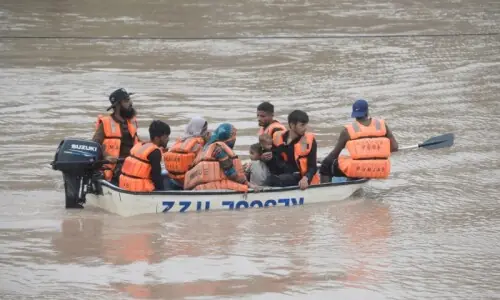
Its financing was pledged by the Manila-based ADB in Geneva last year as part of international support for flood-affected people.
The project is aimed at supporting the farmers affected by the 2022 floods in Pakistan, with long-term objectives of improving agricultural productivity through critical agriculture inputs and training in the safe and efficient use of those agricultural inputs.
It is also expected to improve household nutrition and food security through the provision of kitchen gardening, food processing, seed cleaning and storage toolkits and training to women household members, besides building increased institutional resilience and preparedness for climate-induced disasters.
The CDWP also referred the ‘Sindh School Rehabilitation Project’ to Ecnec. The Rs83.19bn ($300m) project is also part of the Geneva pledges made by the ADB that would bear about 90pc, or Rs75.6bn, of the cost with a $270m lending.
The remaining 10pc cost worth about Rs7.56bn would be borne by the Sindh government. The project will cover 17 districts of the province, help rebuild completely and partially damaged schools and upgrade 62 primary schools to the secondary, middle and higher secondary levels by building new blocks.
The meeting also examined another ADB-funded project involving over $100m lending to the federal government and recommended its approval by Ecnec.
The project, titled ‘Women Inclusive Finance Development Programme’ and estimated to cost Rs31.41bn, aims to support women entrepreneurs across the country.
The Ministry of Finance is designated as the executing agency for this funding, proposed to come from foreign sources, specifically the ADB.
The State Bank, being the implementation agency, will establish a project implementation unit whose expenses will be covered by the central bank’s own funds. The financing will be overseen by a steering committee, which will be led by the SBP’s executive director and also have relevant stakeholders as its members.
The CDWP also cleared another mega water sector project for Sindh and requested its speedy approval by the Ecnec to materialise ADB’s funding after loan approval by the executive board. The Rs74.62bn would help improve Sindh’s barrages.
Besides these crucial projects forwarded to Ecnec, the CDWP also approved five development schemes that fell under its approval ceiling.
It approved the ‘Rehabilitation of Schools in Balochistan Affected by Flooding’ project with a total cost of Rs1.4bn.
The project will cover several districts, including Lasbela, Dera Bugti, Quetta, Sibi, Naseerabad, Chaman, Kalat, Khuzdar, Sohbatpur, Kachhi, Killa Abdullah, Jaferabad, Killa Saifullah, Panjgur, Mastung, Musakhel and Jhal Magsi.
The project, to be funded through the federal Public Sector Development Programme (PSDP), aims to rehabilitate and restore schools that have been severely affected by floods.
The CDWP also approved the Rs3.1bn first phase of a project called ‘Permanent Settlement of Indian Illegally Occupied Jammu and Kashmir (IIOJK) Refugees 1989 Onwards’.
The meeting was informed that about 8,600 families displaced from India-held Kashmir since 1989 were currently residing in Azad Kashmir and many of them were living in poor civic conditions and had to be moved to five-marla proper houses in phases. In the first phase, about 750 houses will be built in Bagh, Hattian Bala, Kotli and Muzaffarabad districts of AJK.
Another project for Azad Kashmir was also approved at the cost of Rs1.622bn to improve the Noseri Leswa Bypass Road covering 52km in Muzaffarabad and Neelum districts.Similarly, a revised project to build a 54km road from Nagor Sharif to Suntsar was also approved with a total estimated cost of Rs2.4bn. The CDWP also approved another project to establish a Pak-Korea testing laboratory for PV modules and allied equipment with an estimated cost of Rs1.505bn.
Published in Dawn, November 4th, 2023