0
0

SOME TIME ago, the story of the physical abuse of Rizwana and the tragic passing of Fatima dominated the news, shedding light on Pakistan’s multifarious challenges. These incidents, while deeply unsettling, act as a lens, exposing the systemic ills entrenched in our societal structure.
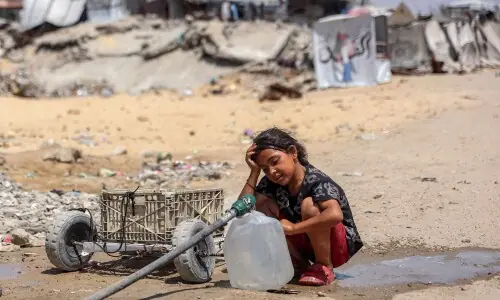
Child labour often conjures up images of boys in factories. The plight of girls in domestic roles is hardly discussed. The story of Rizwana and Fatima revealed that child labour goes beyond working in factories, and is also very much about young girls silently bearing their lot as domestic help, their vulnerability amplified by their hidden existence.
The alleged culprits in such condemnable incidents are often housewives. What has pushed them to perpetrate such atrocities against defenceless children? That answer may lie in their own mental health, which is often rooted in personal trauma. The Pakistan Demographic and Health Survey, 2017-18, reveals that nearly one in four Pakistani women has faced intimate partner violence. Coupled with societal pressures and the stigma attached to those seeking help, this trauma can lead to a volatile mix. Research indicates that exposure to domestic violence can set off a cycle of abuse in adulthood.
Assuming that a significant number of these women have been subjected to domestic abuse either during their childhood or as adults, there are multiple triggers that might push them to continue this cycle of violence. One such trigger is ‘anger’. Young victims often wrestle with profound anger. This anger, while frequently aimed at the abuser, can also be redirected towards others. If not addressed constructively, it can erupt in violent actions. In the Pakistani context, where many homes have vulnerable child maids available at their disposal, it becomes convenient for individuals, be it women or men, grappling with mental health issues, to vent their suppressed anger on these innocent beings, leading to acts of extreme cruelty.
Mental health issues often trigger child abuse.
What prevents these mentally distressed individuals from thinking twice before unleashing harm on defenseless children? The dilemma of out-of-school children. Research links this phenomenon to poverty. World Bank studies reveal that impoverished children are more likely to abandon education and face violence.
With a huge chunk of Pakistan’s populace living below the poverty threshold, parents trapped in dire circumstances send their male offspring to madressahs, hoping the latter will provide them with shelter, sustenance, and schooling. However, for girls, the avenues are limited. Many are sent to work in households, often without remuneration, in the hope that they will acquire an informal education and be given a secure environment. Engulfed by their own struggles, parents often remain detached from their children. In the absence of parental oversight, those who employ these young maids exercise ‘unchecked authority’ over them. As posited by Dennis Wrong, unchecked authority can be a precursor to maltreatment. Combine this with mental health challenges, and the outcome can be catastrophic.
Even within the confines of a madressah, educators often operate with a significant degree of unchecked authority. When some of these educators grapple with mental health issues, we hear of brutality being perpetrated on children in their custody. There have been many reported cases of rape and physical torture. Similarly, household women, burdened with their own mental health struggles, are granted this same unchecked power, and the repercussions of this often weigh heavily on the vulnerable young maids in their care.
Incidents involving children like Rizwana and Fatima serve as a wake-up call. We must address child labour in all its forms, and not just in factories. We need to shed light on the suppressed mental health issues faced by women and provide them with the necessary support. Mental health awareness campaigns should be launched to destigmatise those seeking help and provide resources to those in need. Lastly, the issue of out-of-school children, especially where girls are concerned, must be tackled head-on. By ensuring that every child, regardless of gender, has access to quality education, we can break the cycle of poverty and abuse.
It is time for local stakeholders, not just international NGOs, to step up and address these issues. Social media outrage is fleeting; sustainable change requires collective action and a commitment to addressing the root causes of these societal problems. While the stories of Rizwana and Fatima are heart-wrenching, they offer an opportunity for introspection and change. By addressing the intertwined issues discussed above, we can pave the way for a brighter, more equitable future for Pakistan.
The writer is a professor at the education department at the Sukkur IBA University.
Published in Dawn, October 25th, 2023