HONG KONG: Hong Kong issued its second-highest storm warning signal on Sunday, prompting the closure of some transport services and schools, as Typhoon Koinu skirted the financial hub, bringing rains and powerful gusts.
Koinu comes just a month after Hong Kong was lashed by Typhoon Saola, which triggered its highest “T10” storm alert.
A week after that, the city experienced its highest rainfall in nearly 140 years, flooding subway stations and malls, and causing landslides.
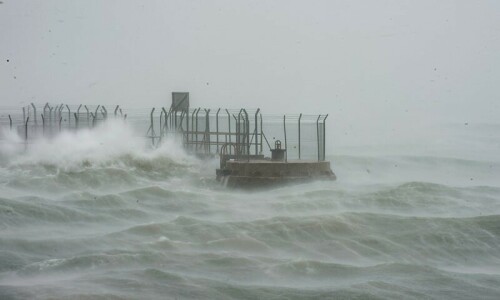
Hong Kong’s weather observatory on Sunday warned of strong winds and intense rain bands as Koinu moved towards the Pearl River Estuary and was expected to skirt as close as 70 kilometres (43 miles) south of the city before midnight.
Around 90 flights cancelled, 130 others delayed
Typhoon Koinu was a “T8” signal for most of the day on Sunday — the second-highest in Hong Kong’s warning system. The warning level is triggered when a storm’s maximum sustained wind speed reaches 117km per hour.
Koinu’s maximum sustained wind speed was observed at 145km per hour.
At 7pm (1100 GMT), the weather observatory raised the warning signal to “T9”.
“This means that winds are expected to increase significantly,” it said.
“Do not go outside and stay away from exposed windows and doors. Make sure you have a safe place to shelter.”
Schools, daycare centres, cargo terminals, ferries and buses suspended operations for the day or the afternoon.
Around 90 flights were cancelled and 130 others delayed throughout the day due to the storm, according to Hong Kong’s Airport Authority.
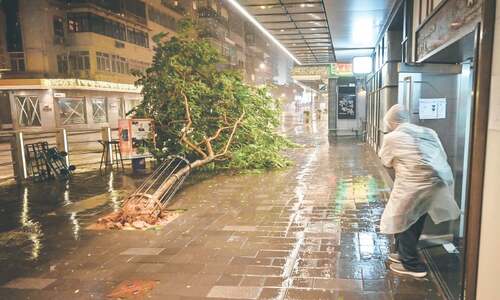
Hong Kong’s government received reports of 11 fallen trees and six people wounded during the typhoon on Sunday afternoon.
“Koinu is a mature typhoon with its eyewall edging closer to the seas south of the territory,” said the Hong Kong Observatory, warning the public to avoid low-lying areas in case of a storm surge.
It added that it would assess the need to issue higher storm warning signals based on wind speeds.
Before moving to Hong Kong, Koinu had grazed nearby Taiwan, bringing torrential rain and record-breaking winds to its outlying Orchid Island.
The storm left at least one dead, and knocked out power to hundreds of thousands of homes.
Southern China is frequently hit during summer and autumn months by typhoons that form in the warm oceans east of the Philippines and then travel west.
But climate change has made tropical storms more unpredictable while increasing their intensity — bringing more rain and stronger gusts that lead to flash floods and coastal damage, experts say.
Published in Dawn, October 9th, 2023