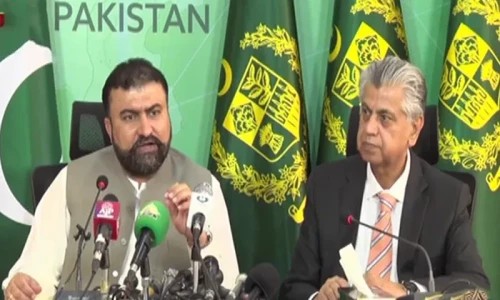
THAT caretaker Interior Minister Sarfraz Bugti openly admitted on Monday that security personnel are involved in large-scale smuggling of currency, oil, and other commodities across Pakistan’s borders with Iran and Afghanistan should be appreciated.
Mr Bugti not only acknowledged that security officials played a role in the illegal cross-border movement of currency and commodities but also indicated that the army chief had warned his men that those involved in the practice would face court-martial and jail.
The clampdown on smugglers and hoarders was launched last month after the army chief’s back-to-back meetings with the business community in Lahore and Karachi where he pledged to crack down on illegal activities “to rid Pakistan of the substantial losses it continues to suffer due to pilferage”.
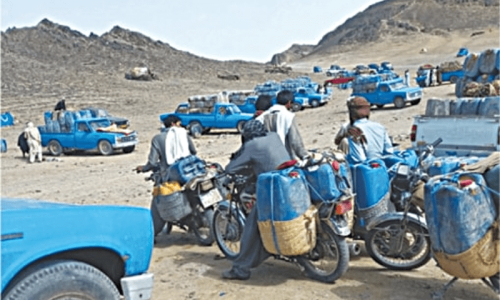
The next several weeks will be a test of the civil and military authorities’ resolve to expose and punish the elements involved in this illicit cross-border trade as the government intensifies a nationwide crackdown to curb the smuggling out of dollars and commodities such as wheat and sugar, and the influx of cheap petroleum and other items from Iran and Afghanistan.
However, our porous borders along Balochistan and KP are not the only routes being used by smugglers to conduct their illegal trade. Indeed, these routes are used to ‘import’ and ‘export’ commodities such as sugar, oil, tyres, urea and even vehicles in big numbers.
But high-value products such as branded perfumes, expensive watches and designer purses are mostly being brought from Dubai and other Gulf nations into the country by khepiyaas through major airports and seaports in connivance with Customs officials and personnel of other agencies. These items are mostly smuggled in without the payment of taxes or are hugely under-invoiced.
Similarly, it is easier to take dollars out of the country via an airport than any other way. No wonder Peshawar’s proverbial Bara bazaar, which used to be the only source of smuggled foreign goods for affluent middle-class families until the late 1980s, has spread across the length and breadth of the country.
The shelves of most shops are stacked with such products because no one asks the powerful trader community to provide documentary proof that taxes were paid on the ‘import’ of such items.
No anti-smuggling drive can deliver complete success without making it difficult for the traders to display and sell smuggled and under-invoiced goods, in addition to dismantling the nexus between traders and civil and security officials posted along the borders and ports.
Smuggling is eating into the economy, weakening it and imposing enormous costs on the manufacturing industry, jobs and public well-being. We can only hope that the current mobilisation against illegal cross-border trade will not be called off midway as has been the case in the past.
Published in Dawn, October 4th, 2023