0
0

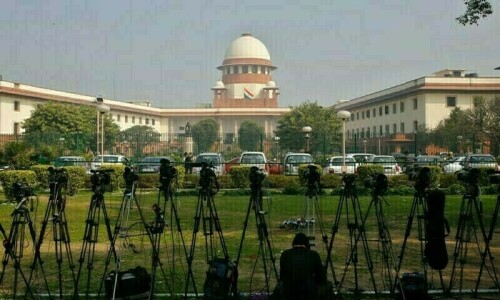
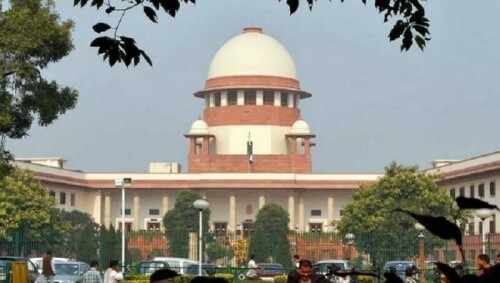
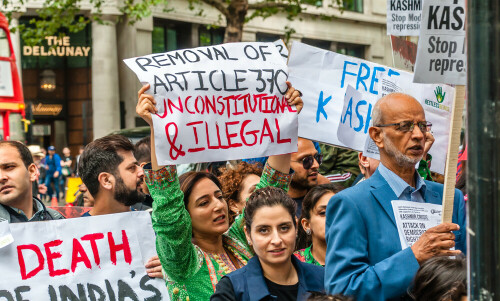
India’s Supreme Court concluded its hearing on Tuesday on a challenge to New Delhi’s 2019 imposition of direct rule in occupied Kashmir, a snap decision that led to protests and mass arrests.
Prime Minister Narendra Modi’s government suspended Article 370 of the constitution that guarantees limited autonomy to the disputed region, home to a long-running insurgency against Indian rule.
The five-judge bench headed by Chief Justice DY Chandrachud will now retire to consider if the move was legal despite lacking the endorsement from parliament usually required for constitutional change.
No timeline has been give for their decision.
The Supreme Court in New Delhi heard arguments over 16 days from government lawyers, constitutional experts representing occupied Kashmir’s pro-India political parties, and others challenging the move.
India has for decades stationed more than half a million soldiers in occupied Kashmir.
Pakistan and India have fought three wars over control of the region and thousands have been killed in a freedom movement against Indian rule in the Muslim-majority territory since 1989.
The suspension of occupied Kashmir’s semi-autonomous status allowed Indians from elsewhere to buy land and claim government jobs there, a policy denounced by critics as “settler colonialism”.
Many residents and critics say that authorities have since curbed media freedoms and public protests in a drastic curtailment of civil liberties.
Modi’s government has defended the decision in the court, saying the change had brought “peace, progress and prosperity” to the restive territory.
Consolidating New Delhi’s rule over its portion of the territory has long been a key plank of Modi’s Hindu nationalist Bharatiya Janata Party.
The frequency of armed clashes between Indian soldiers and freedom fighters has dropped significantly in recent years as India works to fortify its rule over the territory.