Imports of steel, scrap iron almost halve

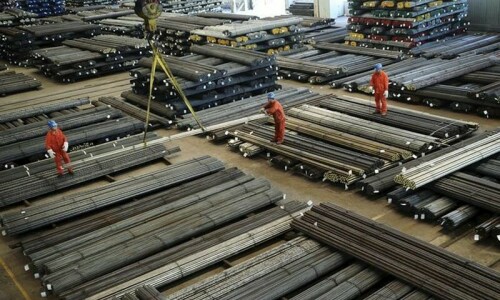
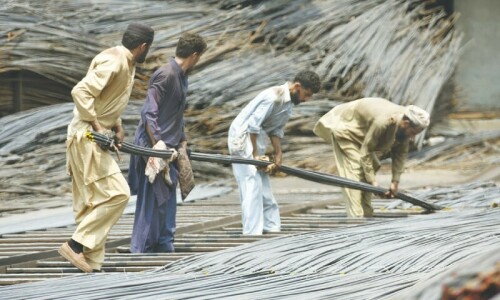
KARACHI: The import of steel and scrap iron plunged by 44 per cent during FY23, reflecting a sharp slowdown in construction and industrial activities due to persistent political and economic instability in the outgoing fiscal year.
According to the State Bank of Pakistan (SBP) data, imports of steel and scrap iron contracted to $2.784bn in FY23 from $4.959bn in FY22.
Analysts attributed this depressing import trend to manifold increase in international steel prices, massive rupee devaluation and restrictions imposed by the SBP on opening letters of credit amid fast dwindling foreign exchange reserves.
The import of steel scraps declined 41pc to $1.686bn in FY23 from $2.853bn in the previous year. Similarly, the steel arrivals almost halved to $1.062bn in FY23 from $2.106bn in the preceding year.
According to data from the Pakistan Bureau of Statistics, Large-Scale Manufacturing (LSM) witnessed a year-over-year contraction of 14.37pc in May. This marked the ninth consecutive month of deterioration for the country’s major industries during the just-ended FY23.
Between July and May, LSM posted a negative growth of 9.87pc on a year-on-year basis. This was in contrast to the positive growth of 11.7pc seen in FY22. The cost of steel increased significantly in FY23, while demand declined, leading to an overall economic downturn that impacted almost all sectors of the economy.
According to a detailed study conducted by Pakistan Credit Rating Agency (PACRA), steel consumption in Pakistan has been declining for the last five years.
Per capita consumption in Pakistan is significantly lower than the world average of approximately 233kg and that of its neighbouring country, India, which stands at 76kg.”
Pakistan’s per capita consumption was 62kg in CY17, decreasing to 53kg in CY18, 42kg in CY19, rising to 49kg in CY20, and reaching 59kg in CY21. This gradual decline in consumption over time highlights poor economic policies that have negatively impacted economic growth.
The annual demand for steel products in Pakistan is approximately 13.5m tonnes as of FY22. Nearly 73pc of this demand is fulfilled through local production, while the remainder is met through imports.
The major raw material used in the steel industry is iron scrap, and Pakistan is an importer of raw iron and steel scrap, according to the PACRA study.
Although Pakistan produces around 1m tonnes of iron ore annually, the country still imports finished steel to meet industry demand.
Pakistan’s steel sector is largely competitive, with 173 players registered with the Pakistan Steel Re-Rolling Mills Association. Private corporations significantly drive Pakistan’s steel sector. Notably, Pakistan Steel Mills (PSM), a state-owned giant with a capacity of 1.1m tonnes, has been inactive since June 2015.
Published in Dawn, August 15th, 2023