PPP central leader Nayyar Bukhari on Friday said the incumbent coalition government should complete its term — set to expire on August 12 — instead of dissolving the National Assembly (NA).
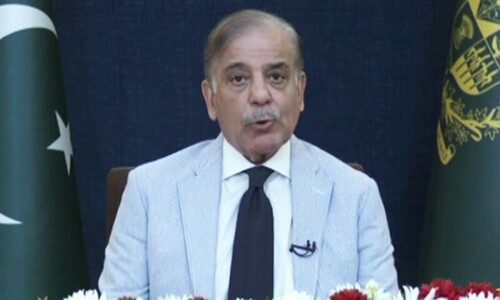
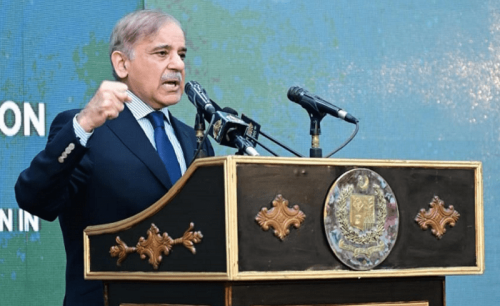
His advice comes after Prime Minister Shehbaz Sharif announced that the coalition government would hand over the country’s reins to the caretaker setup on the expiry of its term next month.
The five-year term of the NA commenced under the then-PTI government on August 12, 2018, and will be completed under a PM-Shehbaz-led ruling coalition following the ouster of former premier Imran Khan through a no-confidence vote in April last year.
PM Shehbaz had earlier said the “term of our government will be over on August 14”. However, a key member of the federal cabinet had later told Dawn that the prime minister had mentioned the August 14 date “only in the context of the country’s Independence Day”.
The minister had added that at subsequent functions, the prime minister clarified and declared that he would hand over the government to the caretakers “upon completion of the constitutional term”.
Meanwhile, confusion also persists about whether the coalition partners would go for the normal dissolution of the NA on completion of its term on August 12, or advise the president for an early dissolution.
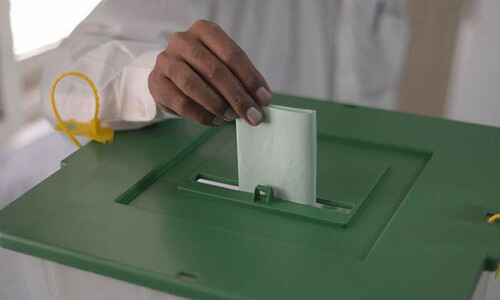
According to Article 224 of the Constitution, “A general election to the National Assembly or a provincial assembly shall be held within a period of 60 days immediately following the day on which the term of the assembly is due to expire, unless the Assembly has been sooner dissolved”. In case of early dissolution, the Election Commission of Pakistan (ECP) is bound to hold the general elections within a period of 90 days after the dissolution, according to Article 224(2).
The provincial assemblies of Sindh and Balochistan also held their first sessions on August 13, 2018, so the term of these provincial assemblies also end with the National Assembly.
Talking to Dawn.com today, PPP’s Bukhari opined: “Dissolving assemblies just a few days before the expiry of the term would not send a good message.”
He recalled that lawmakers had taken the oath on August 13, 2018. “According to this, elections should be held the day the NA completes its five-year term.”
The PPP leader further said that general elections in the country should be held on October 12.
“Dissolving the assemblies to get 30 more days won’t make much of a difference,” Bukhari stated, adding that both the Election Commission of Pakistan (ECP) and political parties were aware of the completion of the incumbent government’s term.
“As per the law and Constitution, the ECP should hold elections 60 days after this process. Dissolving the assemblies will give a few more days, which does not make much of a difference and will also not send out a good message,” he maintained.
The PPP leader added that the decision regarding the caretaker set-up would be taken by the prime minister and the opposition leader. However, if a consensus is not reached between the two leaders, the matter would go to the parliamentary committee.
Bukhari also said that the prime minister would consult with Foreign Minister Bilawal Bhutto-Zardari with regard to the caretaker set-up as he was a member of the cabinet.
Caretaker government
Currently, there are no candidates shortlisted for the caretaker prime minister.
The caretaker prime minister is picked by the outgoing prime minister in consultation with the leader of the opposition.
In case the prime minister and the leader of the opposition do not agree on any person to be appointed as the caretaker prime minister, within three days of the dissolution of the National Assembly, they shall forward two nominees each to a committee to be immediately constituted by the speaker.
The committee should comprise eight members of the outgoing National Assembly, or the Senate, or both, having equal representation from the treasury and the opposition. The committee members are to be nominated by the prime minister and the leader of the opposition, respectively.
The committee so constituted shall finalise the name of the caretaker prime minister within three days of the referral of the matter to it. If, in any circumstance, the committee is unable to finalise a name for the caretaker prime minister, the matter shall be referred to the ECP for a final decision within two days of the referral. During all this, the outgoing prime minister shall continue to hold office until the appointment of a caretaker prime minister.
There are still many if and buts as rumours regarding the caretaker set-up staying for a longer time are also floated. Observers believe that the composition of the caretaker set-up will clear the confusion; if technocrats are brought in, then things will become “more suspicious”.