Govt wants shutters down by 8pm, again


ISLAMABAD: The government has, once again, decided to shut markets and commercial centres by 8pm daily to conserve energy, a decision quickly rejected by traders who say 8pm is when peak time starts.
The government has also decided to include energy reforms in the budget for the next fiscal year to cut the country’s reliance on imported fuel.
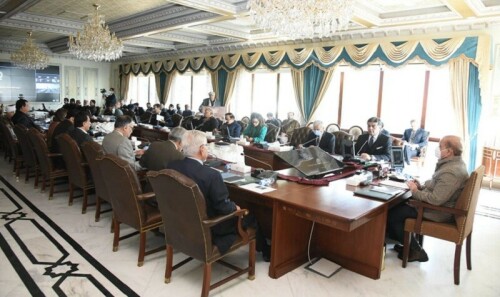
The decisions were taken in two meetings chaired by Prime Minister Shehbaz Sharif on Tuesday.
After a meeting of the National Economic Council (NEC), Planning Minister Ahsan Iqbal told the media that the provinces had agreed to implement the early market closure from July 1.
Traders oppose proposed energy conservation measures; minister says prohibitive fuel costs necessitate early closures
“Today, steps for energy conservation have been recommended under the plan, such as the closure of shops and commercial centres by 8pm, switching to LED lights and upgrading geysers to make them more energy efficient,” he said, hoping that these measures could help the country save up to $1 billion a year.
Recent attempts by the government to enforce early market closure have failed, apparently due to political compulsions and pressure from traders.
Traders have refused to budge this time as well. “We will not close our shops by 8pm in the current season. The government has made many such attempts in the past but failed,” Ajmal Baloch, president of the All Pakistan Anjuman-i-Tajiran, said in a statement.
He argued that people rarely step outside their homes for shopping in summer daytime and that the peak shopping time was 8pm to 11pm these days. “Is it a wise decision to save energy at the cost of the country’s economy?” he wondered, asking the energy minister to hold talks with traders on the matter.
Earlier, Mr Iqbal said energy and infrastructure issues were discussed during the meeting, adding that energy had become a huge challenge for Pakistan due to high global prices.
“Saudi Arabia has cut down oil production by one million barrels, which poses a risk of oil prices rising to $100 per barrel,” he said, highlighting that if Pakistan continued to rely on fossil fuel and oil for its energy needs, “our economy will remain vulnerable”.
To counter this, he said, one of the measures that the government wanted to implement pertained to energy conservation.
The planning minister recalled that the federal cabinet had vowed to enforce decisions under a National Energy Conservation Plan in January this year. “But there was no representation of provinces in that meeting. So, we took it up again in the NEC, where provincial government representatives were also present,” he said.
He said the federal government hoped that provinces would implement the energy conservation package this time.
The energy conservation plan discussed in the federal cabinet in January proposed the closure of markets at 8:30pm and wedding halls at 10pm, the use of efficient electronic appliances, and a 40pc reduction in power consumption in government offices.
It also recommended imposing more duties on inefficient electric fans, using energy-efficient LED bulbs, introducing electric bikes, phasing out motorcycles that run on petrol, and illuminating streetlights only at 50pc capacity.
Energy reforms
In another meeting on Tuesday, the government decided to include energy reforms in the upcoming budget, to be presented on June 9 (Friday).
The meeting focused on energy-related budgetary proposals, the generation of cheap electricity, relief for consumers, and the launch of solar projects.
The Prime Minister’s Office said in a statement that he directed officials to also include in Budget 2023-24 measures to control power line losses and electricity theft.
He also ordered the allocation of funds in the budget for launching wind and solar energy projects and called for the swift completion of power projects.
The meeting was informed that under the government’s solarisation programme for public buildings, four phases had been completed successfully.
The steps taken by the government for the supply of uninterrupted electricity and gas also came under discussion.
Published in Dawn, June 7th, 2023