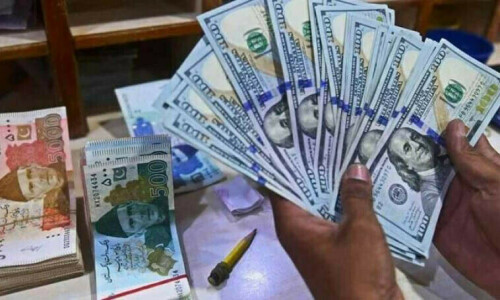
OVERSEAS Pakistanis are sending fewer dollars back home these days, with workers’ remittances dropping 13pc to $22.7bn during the 10-month period between July and April of this fiscal year as compared to the last one. The loss of $3.4bn in home remittances nearly matches the upcoming debt repayments of $3.7bn during May-June.
The amount is also equal to the ‘financing gap’ that Pakistan has been struggling to arrange for the restoration of the IMF funding programme. This loss becomes even more glaring considering the depleted forex reserves that are just enough to pay the bill for five weeks of controlled imports amid growing fears of a default.
The decline in home remittances has been across the board. Yet the Middle East, which contributes over half of Pakistan’s total remittances, is the key region playing a bigger part in this decline with Pakistani workers living in countries like Saudi Arabia and the UAE having sent $2.5bn fewer dollars.
Likewise, the inward remittances from the UK and EU fell by $500m. While the decline from the UK and EU is attributable mainly to surging costs of living amid the ongoing economic slowdown in those economies, the large drop from the Middle East is being driven by growth in cash transfers through the illegal hawala/hundi channels.
Large traders and commercial importers are using these channels to buy foreign exchange from non-resident Pakistanis at much higher than the interbank rate to pay for their imports — to steal taxes as well as circumvent SBP restrictions imposed to slash imports, limit dollar outflow and protect its scanty foreign exchange reserves.
With the long-delayed IMF bailout deal nowhere in sight amid a drying up of external financing from other sources — including the so-called friendly nations — the workers’ remittances are crucial to keep the economy afloat and avert a default on sovereign debt.
The non-debt creating remittances have supported the country’s current account for the last two decades. Even though remittances have followed a declining trend during the current fiscal year, the increase in transfers through official channels in the last two months is an encouraging development for the country’s fragile external account.
It is, however, too early to say whether the surge in March-April sums sent home by overseas Pakistanis — after a sharp decline between November and February — represents a reversal in the downward trend or it is just a seasonal aberration due to the seasonal Ramadan/Eid effect.
In order to maintain the present upward trend, the government must adopt policies to at least curb, if not completely destroy, the demand for hawala/hundi dollars to bridge the wide price gap in official and unofficial forex markets.
Every dollar saved is worth the effort because the foreign exchange crunch is pulling the economy apart, leading to industrial closures and job losses and destroying demand.
Published in Dawn, May 15th, 2023