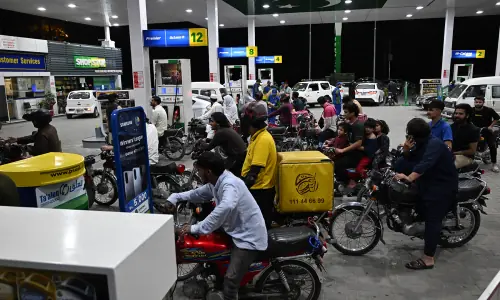
ISLAMABAD: While air pollution kills over 128,000 people annually in Pakistan, a coalition of civil society organisations has urged the financial industry to repurpose its role to drive low carbon future and ensure clean air for all.
The Fair Finance Pakistan (FFP) suggested that the financial sector should transit from reporting to compliance of regulatory guidelines and embed environmental, social and human rights standards in their business operations and policies A joint communiqué also recommended that civil society should be consulted to include citizens’ voices in State Bank’s latest Environmental Social Risk Management Manual (ESRM).
However, after a meeting the coalition of civil society suggested that the manual should have an integrated approach to embed human rights standards.
“Pakistan is the third most air polluted country in the world and warrants urgency for the financial industry to transit from reporting to compliance of regulatory guidelines to repurpose its role in the society, shift from fossil fuel to renewable energy,” said the coalition of civil society organisations, business leaders and advocacy groups led by Fair Finance Pakistan during its annual meeting, according to a statement.
Addressing participants of the meeting, FFP’s Country Programme Lead Asim Jaffry recommended that the ESRM must have an integrated approach to embed human rights standards and fully recognise urgency of mitigating climate change and air pollution.
“Air pollution kills over 128,000 people annually in Pakistan and imposes substantial welfare and economic costs. Introducing clean air legislation is pivotal to provide clean air as a basic human right and prevent disease burden caused due to air pollution related illnesses in Pakistan,” he said.
Executive Director Centre for Peace and Development Initiatives (CPDI) Mukhtar Ali said: “Countries must transfer low-carbon technology to Pakistan to combat air pollution. Banks should facilitate businesses by introducing and promoting environment-friendly products.”
Indus Consortium CEO Hussain Jarwar said floods of 2022 were a wake-up call on Pakistan’s vulnerability to climate crises.
“Institutions must work collectively and holistically for forward looking impact on environment as a shared responsibility,” he said.
Published in Dawn, May 15th, 2023