0
0

PARIS: France’s public health watchdog said on Thursday that mass testing of drinking water revealed traces from a banned pesticide in half the samples, showing how potentially harmful chemicals persist in the environment.
The National Agency for Food, Environment and Workplace Security (Anses) began a testing regime in 2019 to identify around 200 complex chemical compounds originating from pesticides or explosives which are not normally sought in its routine checks.
The agency said “one case in particular stood out “: traces left behind from a fungicide known as chlorothalonil, sold widely by Swiss chemicals group Syngenta in Europe from the 1970s until it was banned by the EU in 2020.

A chemical produced when the fungicide breaks down, known as metabolite R417888, was found in “more than one in two samples. Furthermore, it was found in higher-than-authorised quantities in more than one sample in three,” Anses said.
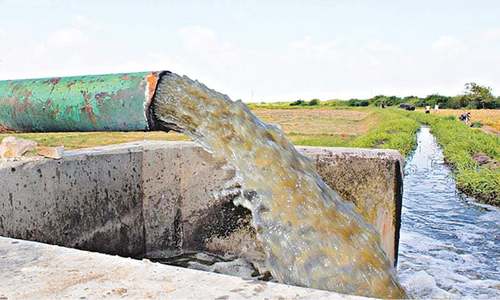
The results are likely to raise questions about the presence of other undetected chemicals in drinking water and pose potentially major operational and financial challenges for water companies.
French authorities were alerted to the possible presence of chlorothalonil metabolites by studies carried out in Switzerland.
In February, Anses ordered a halt to some uses of one of the most widely used weed-killers in France, S-metazachlor, which is also produced by Syngenta, after finding excessive levels in groundwater.
Mildew protection
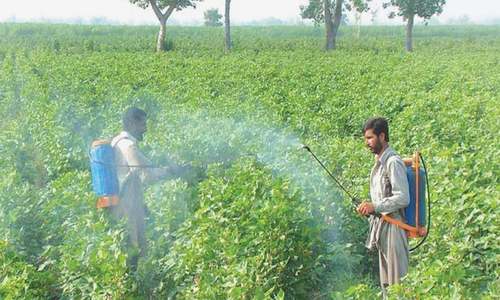
Chlorothalonil, sold under the brand name Bravo by Syngenta, was a best-selling product to prevent mildew and mould on crops such as barley and wheat, as well as potatoes, peas and beans.
It was banned in the European Union after a review by the European Food Safety Authority concluded it was potentially carcinogenic amid concerns about the contamination of groundwater.
Anses said in a report last year that laboratory studies on chlorothalonil had linked it to kidney tumours in rats and mice, while other studies have suggested it has played a role in the vast decline in bumblebee populations.
Syngenta, which was bought by ChemChina for $43 billion in 2017, lobbied against a ban on its product, pointing to other studies that disputed any carcinogenic effect.
The multinational sued Switzerland’s Federal Food Safety and Veterinary Office (FSVO) after it warned that chlorothalonil was a probable carcinogen.
It says on its Swiss website that reports about water contamination had “needlessly undermined citizen’s confidence in our drinking water.” It also sought to stress how authorised levels of chlorothalonil in Switzerland — and the EU — were extremely low at 0.1 micrograms per litre of water, which was the equivalent concentration of “dissolving a grain of sugar in 200,000 bathtubs of water.”
Farming groups criticised the EU at the time over the ban, calling it overly precautionary.
Anses said its testing had involved taking 136,000 samples across France from groundwater sources or treated water, but said they represented only about 20 per cent of all water distributed in the country.
Published in Dawn, April 7th, 2023