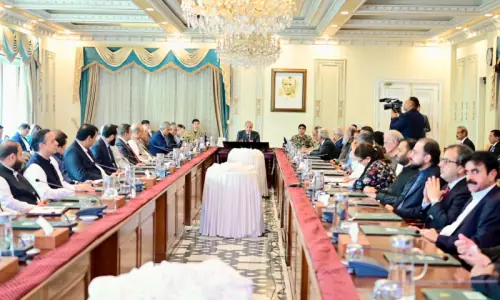
ISLAMABAD: The Economic Coordination Committee (ECC) of the cabinet on Wednesday approved amendments to the Import Policy Order 2022 to comply with new international guidelines on live animal trade.
The committee’s meeting, presided over by Finance Minister Ishaq Dar, also approved a Rs300 million supplementary grant to the Ministry of Housing and Works for repairing and maintaining public buildings.
The import of live animals and animal products is regulated under the Import Policy Order (IPO), 2022, in line with guidelines issued by the World Organisation of Animal Health (WOAH), an intergovernmental body coordinating, supporting and promoting animal disease control.
The Ministry of National Food Security and Research had sought changes to the text of paragraphs 5(2b), 6(5) and 6(6) of the order because the conditions and guidelines relating to trade in animals (cattle) had been revised by the WOAH in its latest Terrestrial Animal Health Code. The proposed amendments are in line with international regulations.
The ECC approved the proposed changes to the relevant IPO clauses under which the import of live cattle, meat and bone meal, and feed ingredients of animal origin are banned from countries classified by the WOAH as controlled bovine spongiform encephalopathy (BSE) risk and undetermined BSE risk.
Under the changed paragraph 6(5) of the IPO, live cattle and commodities of bovine origin are importable from countries subject to the condition that the country, zone or compartment is classified by the WOAH in the latest edition of the Terrestrial Animal Health Code as negligible BSE status.
Besides, the state veterinary authority in the exporting country shall certify that the cattle being exported were born and raised in the country of origin or from cattle that have been legally imported.
Moreover, feeding meat and bone meat and greaves of ruminant origin to ruminants is banned and effectively enforced at least two years before the birth of said categories of animals being exported, and meat and meat products were not derived from specified risk material for the BSE disease.
Likewise, para 6(6) would now read that live animals, other than cattle, and products of animal origin containing no other tissues from cattle are importable regardless of the BSE status of the exporting country; pets (cats, dogs, fancy birds, etc.) are importable from controlled and undetermined BSE risk status country and the products of animal origin are importable from controlled and undetermined BSE risk status country subject to the certification by the veterinary authority in the exporting country.
Published in Dawn, April 6th, 2023