0
0

KARACHI: Senior journalists and media practitioners on Wednesday blamed social media for contributing the most to the spread of misinformation in society, but acknowledged that more proactive steps were needed — both from the media and the media consumers — to be able to spot fake news and prevent it from causing wider social harm.
The issue came under discussion during a webinar, organised by the Uks Research Centre and Deutsche Welle Akademie. Titled ‘Redefining Pakistani Journalism: The Promise and Perils of Constructive Reporting’, the discussion featured prominent journalists such as former PFUJ president Shahzada Zulfiqar, TV anchors Zarrar Khuhro, Mehmal Sarfaraz, and Peshawar-based senior journalist Farzana Ali, among others.
Ms Ali raised the issue of misinformation on social media, saying that nowadays, many newsrooms were reliant on the medium for collecting information. In many cases, information directly copied or shared as received on social media was a major source of spurious information.
She advocated for cross-checking information with relevant and credible sources to confirm a piece of news to avoid mistakes. The race to be the first to break news has compromised the quality of coverage, she said.
However, she noted that there was a great deal of potential if the digital medium were to be properly, as an alternative medium to discuss the problems mainstream media could not talk about, either due to lack of time and space or other issues.
Mr Khuhro also echoed this view, saying that as long as journalists went by the book and covered a story step by step, it didn’t matter what the source of the information was. Responding to a question, he said that most people had to become reporters or fact checkers, giving the example of fake images that can be used to create misunderstandings. However, he noted that the use of tools such as reverse image search could help curtail such problems.
He noted that people complain when an important issue isn’t covered, but if something constructive is being discussed, the viewership drops. “We sell what they buy,” he said, adding that trends indicate that people don’t want to consume “constructive” discussions, they just want to talk about politics on every platform, which is why the media also gives it so much coverage.
Ms Sarfaraz talked about how political polarisation was a serious issue in Pakistan; people give their opinion and criticise without reading a story, which makes it hard for journalists to do their jobs.
Highlighting the issues faced by journalists in far-flung areas, Mr Zulfiqar pointed out that no news channels were headquartered in Balochistan.
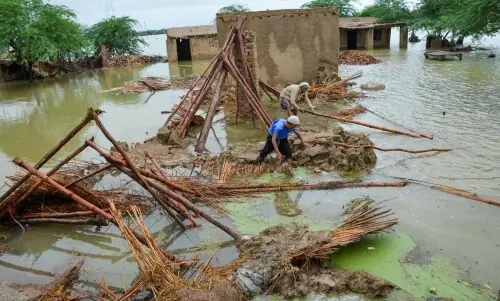
He also lamented how, during last year’s disastrous floods, Balochistan was largely ignored in mainstream media coverage, as compared to other provinces.
Published in Dawn, March 30th, 2023