Inflation-hit consumers welcome ‘cheap’ Iranian food products



ISLAMABAD: With food inflation hitting up to 42 per cent in urban areas, a large number of consumers have opted for slightly cheap but ‘high quality’ Iranian ‘smuggled’ products, such as oil and cheese, readily available in Rawalpindi and Islamabad.
Several shops in twin cities have dedicated racks for Iranian goods, but the best place to bargain for these items, mainly packaged food, is the weekly bazaar at Peshawar Morr.
Naimat Khan, a stall-holder at the weekly bazaar, used to sell dry fruits and spices but now he has one section in his shop displaying Iranian goods. He said that the profit margins were better and there was no complaint about the Iranian goods besides the shelf life was also longer.
Though there are a number of products available in the market, the most sought-after Iranian products are cooking oil and butter - but it is hardly available for domestic consumers since commercial consumers get hold of them directly from the wholesale dealers.
The arrival of Iranian goods has been received wholeheartedly by the consumers too, who express confidence in these food items.
‘Smuggled’ products in high demand due to ’fine packaging quality
“Just look at this sealed bottle of 1.5 litre lassi…not only that it is very well packaged but like every other product, the expiry date is clearly stamped,” said Asmat Zehra.
She also referred to tomato puree and red chili paste, saying it is such a relief for households when the price of fresh tomatoes was on the rise.
She claimed that the imported Iranian items have good packaging and some of them were even up to 50 per cent cheaper compared to Pakistani products. She added every shopkeeper has different rates so bargaining was mandatory.
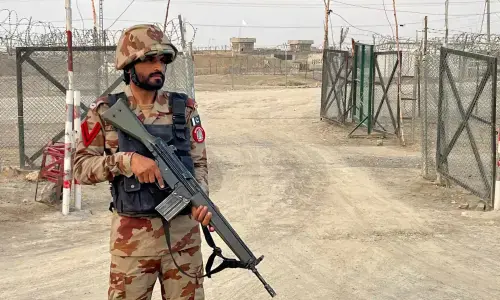
However, Ms Zehra missed the point that most of the Iranian goods were not imported products but smuggled items brought to the country through a porous border between Iran and Balochistan as well as through Afghanistan.
Apart from Balochistan, Iranian goods were earlier available in Lyari only but now the traders have expanded their outreach to almost all parts of the country including Islamabad.
The wholesalers are mostly based in Bajaur Plaza near Fawara Chowk Rawalpindi, where a wide range of Iranian products were available.
The shopkeepers at Bajaur Plaza, however, become stiff-lipped when asked about the route of trade or anything other than the quality and rates of these products.
According to experts, border trade especially at the Balochistan-Iran border “is not categorised as smuggling” by either side.
“Balochistan is the most sparsely populated area of Pakistan and it is not possible for our system to meet the needs of the people in remote parts of that province – even electricity to Gwadar and some other regions is coming from Iran as it was too costly to extend the national grid there,” said Nasir Sherazi, the president of Centre for Pakistan and Gulf Studies (CPGS).
He added that the Iranian government provided subsidised consumer items to their citizens in bordering areas, and in this case, the Baloch residents of Iran share the benefit with their community members in Pakistan as well.
“The surplus quantity is sold in open markets, and now they have expanded the market up to cities in Punjab,” he said adding that, “these items are not totally duty-free – as some gratifications are given to relevant authorities as trucks travel from the border up to the cities.”
“Iran does not enjoy many free trade benefits due to American sanctions, therefore we have to be highly competitive both in pricing as well as quality,” said Dr Mohammad Reza Rahimnejad, professor of sociology at a Tehran university, while commenting on the fine quality of Iranian products.
Talking to Dawn via phone, he said that Iranian food items were exported to many Gulf and European countries, including UAE and Qatar, therefore the food industry had to follow the EU standards.
Published in Dawn, March 28th, 2023