Over 10m flood affectees still lacking access to safe drinking water: Unicef
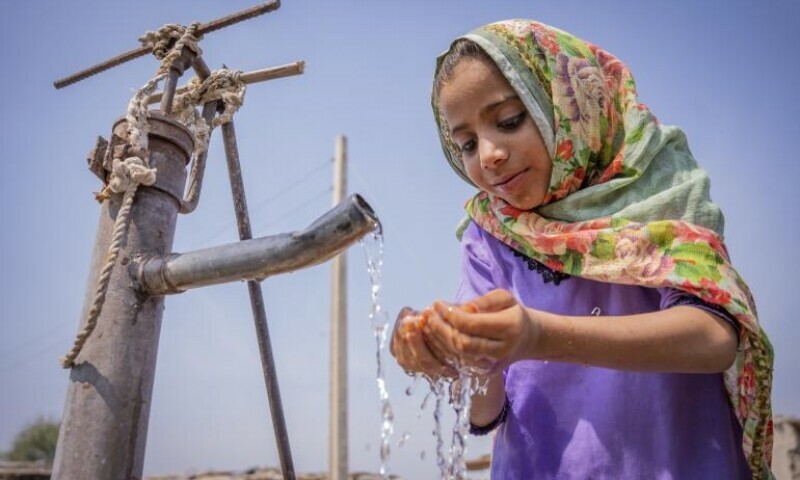

The United Nations Children’s Fund (Unicef) warned on Tuesday that over 10 million flood affectees, including children, still lacked access to safe drinking water after last year’s catastrophic floods.
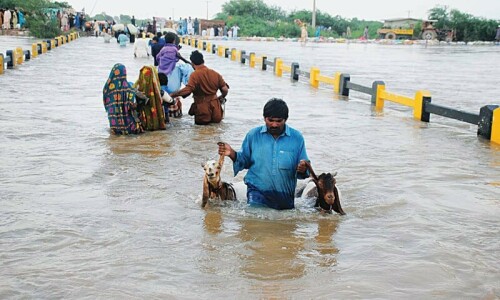
The disastrous floods of 2022 were the tenth most expensive climate disaster to have buffeted a nation over the last decade, according to risk modelling firm RMS. The floods inflicted an estimated loss of $3 billion on the country, caused over 1,700 deaths and displaced eight million people.
In a press release issued today, Unicef said that deprived of safe drinking water, families in flood-affected areas were left with no choice but to drink and use “potentially disease-ridden water”.
“Even before the floods, despite the country’s drinking water supply system covering 92 per cent of the population, only 36pc of the water was considered safe for consumption.
“The floods damaged most of the water systems in affected areas, compelling more than 5.4m people, including 2.5m children, to solely rely on contaminated water from ponds and wells,” the UN agency said.
Unicef Representative in Pakistan Abdullah Fadil said safe drinking water was a “basic human right” and not a privilege, adding that millions of children in the country were daily “fighting a losing battle against preventable waterborne diseases and the consequential malnutrition”.
“We need the continued support of our donors to provide safe water, build toilets and deliver vital sanitation services to these children and families who need them the most,” the press release quoted him as saying.
Unicef warned that the prolonged lack of safe drinking water and toilets, along with the continued proximity of vulnerable families to bodies of stagnant water, was contributing to widespread outbreaks of waterborne diseases such as cholera, diarrhoea, dengue and malaria.
“At the same time, open defecation has increased by more than 14pc in the flood-affected regions. To make matters worse, the lack of proper toilets is disproportionally affecting children, adolescent girls and women who are at added risk of shame and harm when defecating outdoors.”
Unicef outlined unsafe water and poor sanitation as the key reasons for malnutrition in the country, adding that it was linked with “half of all child deaths” in Pakistan.
“In flood-affected areas, more than 1.5m boys and girls are already severely malnourished and the numbers will only rise in the absence of safe water and proper sanitation,” the agency warned.
It noted that six months after the floods, over 9.6m children still require access to “essential social services”.
“Unicef’s current appeal of $173.5m to provide life-saving support to women and children affected by the floods remains less than 50pc funded,” the organisation pointed out.
“It is imperative that the voices and the needs of children in Pakistan are prioritised at all costs and that children are placed at the heart of all post-flood recovery and resilience plans,” the press release quoted Fadil as saying.
Unicef called on the government, donors and its partners to allocate resources to restore access to safe drinking water and toilets and invest in climate-resilient safe drinking water supply facilities and the use of renewable technologies such as solar pumping systems.