WASHINGTON: Afghanistan remains the world’s largest humanitarian crisis in 2023, notwithstanding, of course, the recent devastating earthquakes in Türkiye and Syria, warned a senior UN official.
Ramiz Alakbarov, UN Deputy Special Representative and Humanitarian Coordinator for Afghanistan, also reported that there has been “no encouraging development” towards getting girls back into classrooms either.
Since coming to power in August last year, Taliban have gradually expelled girls from schools and women from workplaces and have refused to change their policies despite increasing international pressure and economic sanctions.
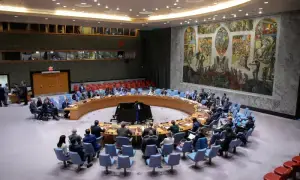
Addressing a news conference in New York on Tuesday, Mr Alakbarov said that the climate change and economic downturn had further deepened the crisis in Afghanistan where “28 million people now depend on aid to survive”. The UN and partners are seeking $4.6 billion this year to assist the Afghan population.
Mr Alakbarov reported that over the past 18 months, Afghanistan’s gross domestic product (GDP) declined by up to 35 percent, the cost of a basic food basket rose by 30pc and unemployment by 40pc. “And roughly 75 per cent of people’s income is now spent just on food,” he added.
He noted that the Taliban have made exceptions for women’s participation in the health and education sectors following the visit by UN relief chief Martin Griffiths last month. The health sector exemptions on female participation include not just medical services delivery in the facilities, but also psychological support, community-based health activities and nutrition. And it is applied to all females working in offices, hospitals, health centres, or mobile teams. The situation is similar for women teachers, including in providing community-based education through non-governmental organisations.
Mr Alakbarov, however, said that those exceptions only apply in places “where a mahram (male guardian) is available” to supervise women.
Responding to a question about reported divisions within the Taliban leadership over the education and humanitarian bans, the UN official said it would not be helpful to discuss this.
UN officials, he said, continue to engage with the de facto Taliban authorities in the aftermath of edicts banning girls from attending secondary school and women from working with local and international aid agencies on the ground.
Published in Dawn, March 2nd, 2023