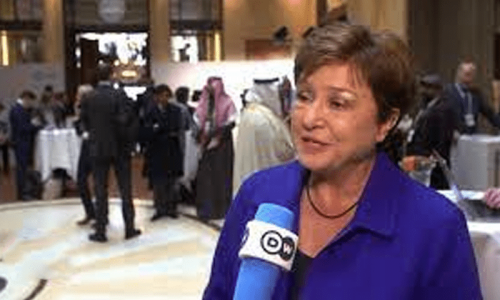
IN her remarks to a German broadcaster on the sidelines of the Munich Security Conference last week, IMF managing director Kristalina Georgieva set out the agenda for good fiscal governance in Pakistan. “What we are asking for are steps that Pakistan needs to take to be able to function as a country and not to get into a dangerous place where its debt needs to be restructured,” she said.
Her advice: tax those who are earning well in both the public and private sectors and give subsidies only to the poor who actually need it. That the IMF chief’s statement has come at a time when Islamabad is struggling hard to close the deal with the international lender for the restoration of the loan programme, amid fears of defaulting, shows that differences between the two sides are far from settled.
From her talk it has also become evident that the IMF is not satisfied with the increase in the consumption tax rate and wants the government to enhance income tax on the rich.
But it is still uncertain whether the IMF is asking only for an increase in income tax rates on existing taxpayers or is pressing for broadening the net and pulling in all those who have evaded paying their dues or who have undertaxed incomes from real estate, retail, agriculture, etc. Hopefully, this should become clear in the coming days.
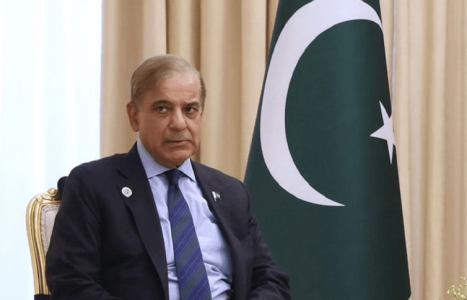
The more important question focuses on whether Prime Minister Shehbaz Sharif’s politically embattled government is ready to take the plunge and risk the anger of his party’s core constituents from the retail and real estate sectors, and withdraw the massive energy and tax subsidies given to powerful factory owners.
So far, the government has shown virtually no signs of embarking on this ‘difficult’ route, as it fears the electoral repercussions of annoying its vote bank. Rather, the rulers are trying to meet the IMF’s revenue condition through enhancing indirect taxes, even though they are fully aware that the move will heap further misery on low-income households that are already contending with the effects of soaring inflation.
This is not what any caring government would do in a country that has the world’s second highest number of out-of-school children, where nearly 10m youngsters suffer from stunting because of chronic malnutrition and undernutrition, and where 70pc of households have no option but to drink germ-infested water.
The ongoing economic crisis has increased financial and gender disparities. The main purpose of a good tax policy is to bridge these gaps and to reduce economic differences by directly taxing the affluent.
Sadly, our tax structure is geared only to further enrich the wealthy, and they are the ones who control politics, directly or indirectly. Without a just socioeconomic order, the challenges will only grow.
Published in Dawn, February 22nd, 2023