Nepotism marred judicial inductions: ex-SC judge


 0
0

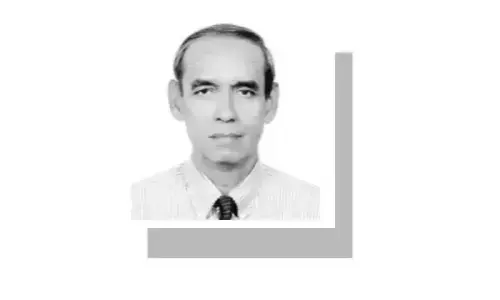
KARACHI: Former Supreme Court judge Maqbool Baqar has said judges are not appointed to the top court on merit and the process to induct adjudicators had been marred by favouritism and nepotism since independence, Dawn.com has reported.
During a panel discussion at the Karachi Literature Festival, the retired Supreme Court judge linked the judiciary’s shortcomings to the process of inducting judges.
The discussion was titled ‘Rising expectations of Pakistan’s judiciary’ and the panel also featured seasoned lawyer Hamid Khan and Palvasha Shahab. It was moderated by senior advocate Faisal Siddiqi.
“The inductions in the judiciary have not been up to the mark [right from] our independence. There was nepotism, favouritism and sacrifice of merit soon after we inherited the Government [of India] Act 1935 after the creation of Pakistan,” Mr Baqar said.
In his remarks, Mr Baqar — who also served as Sindh High Court chief justice — said no institution was free of corruption.
Maqbool Baqar says chief justices ‘abused’ their powers in past
“There is corruption [in the judiciary also], but it can’t be said at what level. We have had notorious members. I can name them but it would be personal, hence, I should not comment further,” he said.
Mr Baqar further said that there were examples of chief justices abusing their power.
“Some people make use of democracy for power grabbing. Let me also underline that politicians unfortunately have been soft targets, while the media is also among the list of victims.”
When asked about the general perception regarding the judiciary being influenced by external elements, Mr Baqar said, “Nobody can influence or pressure anyone. If you are strong deep down and you have conviction, no one can pressure you. You cannot be confident until you are strong and insightful.”
He also talked about the recent discord in the legal fraternity regarding the decision to elevate judges to superior courts.
He said there has been a growing demand to formulate rules for the elevation of judges.
SJC has become ineffective
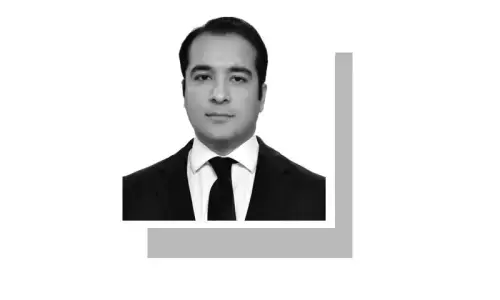
Former Supreme Court Bar Association president Hamid Khan said the “weakness” of parliament was equally responsible for the predicament.
He recalled that ex-SC chief justice Asif Khosa had taken a suo motu notice of the extension given to former chief of army staff retired general Qamar Javed Bajwa.
“However both the bench and the parliament demonstrated rare unity and the decision was given legal cover through a law, and later another six months were given to decide on the matter.”
He further said that the accountability of judges was missing from the process.
He called out the Supreme Judicial Council (SJC), saying it has become an “ineffective body”. “We have not seen it take suo motu notice for the last 15 or 20 years. Non-transparency is rife in the Judicial Commission of Pakistan and the SJC.”
‘Gender imbalance should be addressed’
In her remarks, Ms Shahab pointed out that the dispensation of justice will be impacted if the judiciary was wholly or predominantly male-dominated. “The judiciary doesn’t operate in a vacuum.”
She believed that if the judiciary could not take notice of “violent patriarchal public reason”, it cannot claim legitimacy and assert it is doing its job.
“When we saw the appointment of Justice Ayesha Malik, there was a hue and cry. But the kind of reaction to her nomination was reactive.”
She said there was no women representation in the Pakistan Bar Council, which had 23 male members. “Until we really streamline the system, we will struggle in ensuring equity and justice.”
Published in Dawn, February 20th, 2023