AT this doleful time, we should mourn with our Turkish and Syrian brethren. They have suffered a horrendous series of earthquakes and aftershocks. We must, if only because, during the floods of 2010, the Turkish people came to our rescue.
That was when Mrs Erdogan donated a diamond necklace for our flood victims. Perhaps the Pakistani VIP’s wife who purloined it for her personal toshakhana might like to donate her jewellery towards the relief of today’s Turkish and Syrian homeless.
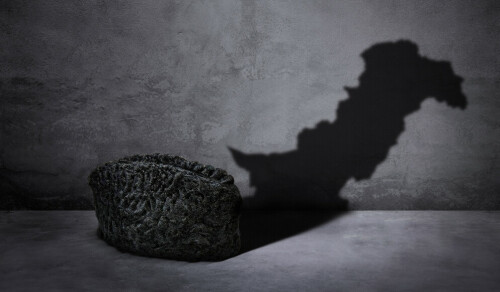
In Pakistan, which is balanced precariously on its own fault lines, we are enduring separate seismic traumas. Daily, we are made to relive the same two-nation theory that split and continues to keep us apart.
In 1947, we became independent, one country comprising two disparate nations — the eastern wing with its own culture, language and ideology, and here in the west, a loose confederation of socially disparate provinces, each with its own subculture, local dialect and provincial pretensions.
Today, we are again two separate nations.
After 1971, the four provinces of West Pakistan became a residual Pakistan, but with two separate nations — Mr Zulfikar Ali Bhutto’s Pakistan Peoples Party, and the rest. The higher strata enjoy the benefits of five-star roti, designer kapra and makan (usually abroad), while the lower strata wait still for Bhutto’s successors to redeem his promise.
Gen Ziaul Haq’s tenure reminded us that there were two nations — one with its capital in Rawalpindi and the other located in Islamabad.
Today, we are again two separate nations — Mr Imran Khan’s populist Pakistan Tehreek-i-Insaf vs the rest. Dr B.R. Ambedkar in his Pakistan or Partition of India (1945) described an earlier confrontation between the Quaid and the Mahatma. Replace the names of Jinnah and Gandhi with those of modern political adversaries, and you will see how two nations are created: “Mr Gandhi and Mr Jinnah have retired to their pavilions as players in a cricket match do after their game is over [.] There is no indication whether they will meet again and if so when. What next? It is not a question which seems to worry them.”
Those opponents had two alternatives: agreement or arbitration. Then, just as today, the first appeared unlikely. The second involved intervention by a third party — what, in modern political parlance, is referred to as a neutral umpire.
The theory applies also to religion. We have two major sects — Shia and Sunni. The rest — the minorities, including other faiths represented by the white panel in our flag, don’t seem to matter anymore.
We have two nations evolving out of our inequitable educational systems — an English-speaking elite and an Urdu-speaking mass. Educationists have forgotten the commitments contained in the 18th Amendment to our Constitution, passed unanimously with fanfare by our parliament in April 2010. Had it been implemented, by now, every 13-year-old Pakistani girl and boy should have received free education up to secondary level.
The provinces should have had in place “the curriculum, syllabus, planning, policy, centres of excellence and standards of education”. Where are they, and, if they exist, in which province?
Our schizophrenic country contains two nations — the privileged Haves and the suggling Have-Nots. Soon — sooner, if prices rise the way they have — the Have-Nots will have cause to revolt against the Haves.
We are governed by two nations — one civilian and the other in uniform. Each has its own laws, its own economy, its own budget, and its own domestic and foreign policy.
The recent funeral of former president Gen Pervez Musharraf has shown that one nation buries its dead with full military honours in Karachi, while the civilian leadership in Islamabad chooses not to send any representative to his funeral, not even a president. Queen Elizabeth II was luckier. Our PM did manage to be in London to participate in her funeral.
But then, we do this with all our incoming and departing leaders. To quote Kahlil Gibran: “Pity the nation that welcomes its new ruler with trumpeting,/ and farewells him with hooting.
Now that farewells are being mentioned, with the deaths of two icons — Amjad Islam Amjad on Feb 10 and Zia Mohyeddin on Feb 13 — future litfests have lost their voices. Neither Amjad sahib nor Zia sahib needs an epitaph. Their creative lives will serve as their monument.
Poetry is the language of mourning. One poem of Amjad sahib’s (almost a haiku in its brevity) is both prescient and poignant. Its title is The Wind Cannot Read: “I had installed/ several signboards carefully/ throughout the garden. I planted signs: ‘Don’t pluck flowers.’ I didn’t realise that the wind cannot read.”
Like the wind, death too is illiterate.
The writer is an author.
Published in Dawn, February 16th, 2023